

 Current
location:
Current
location: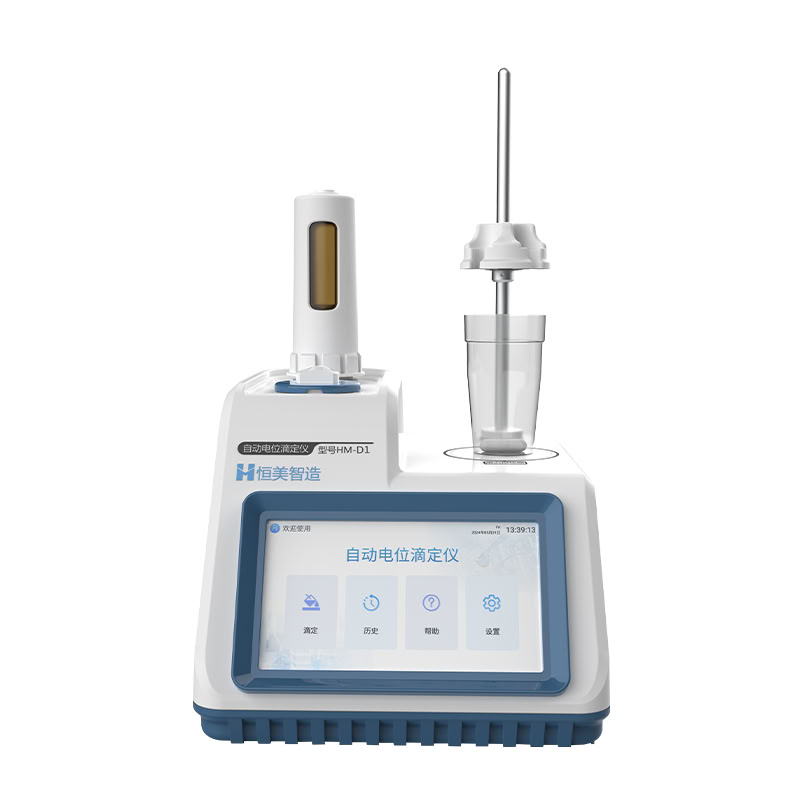
 +86 17853698681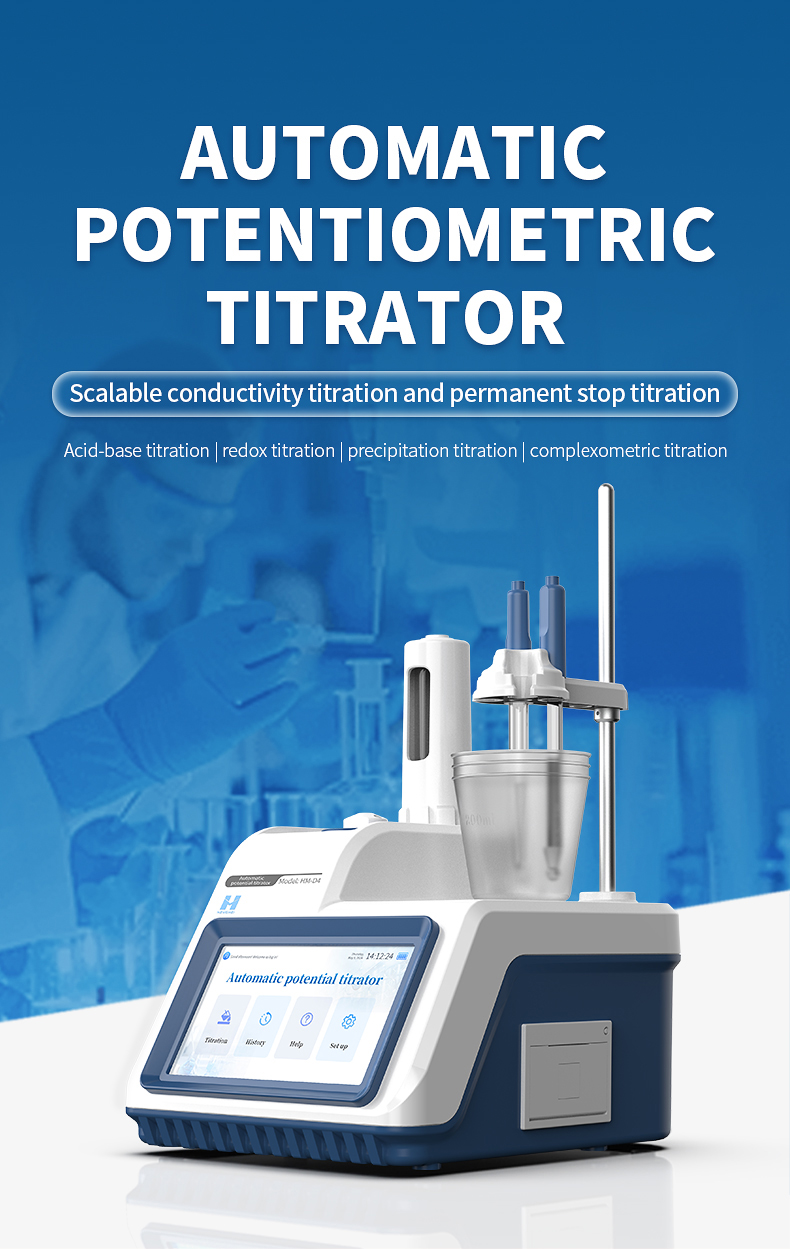
Product Introduction
Modern analytical laboratories increasingly serve multiple industries and handle diverse sample types — a food safety lab may also perform environmental water testing; a pharmaceutical QA facility may need to analyze petrochemical raw materials; a university teaching lab must cover every titration technique in its curriculum. In these multi-disciplinary environments, maintaining separate dedicated instruments for each titration method creates redundant capital expenditure, excessive bench space consumption, duplicated calibration schedules, and fragmented data management systems. The total cost of ownership — including procurement, validation, maintenance, and training — grows linearly with each additional instrument.
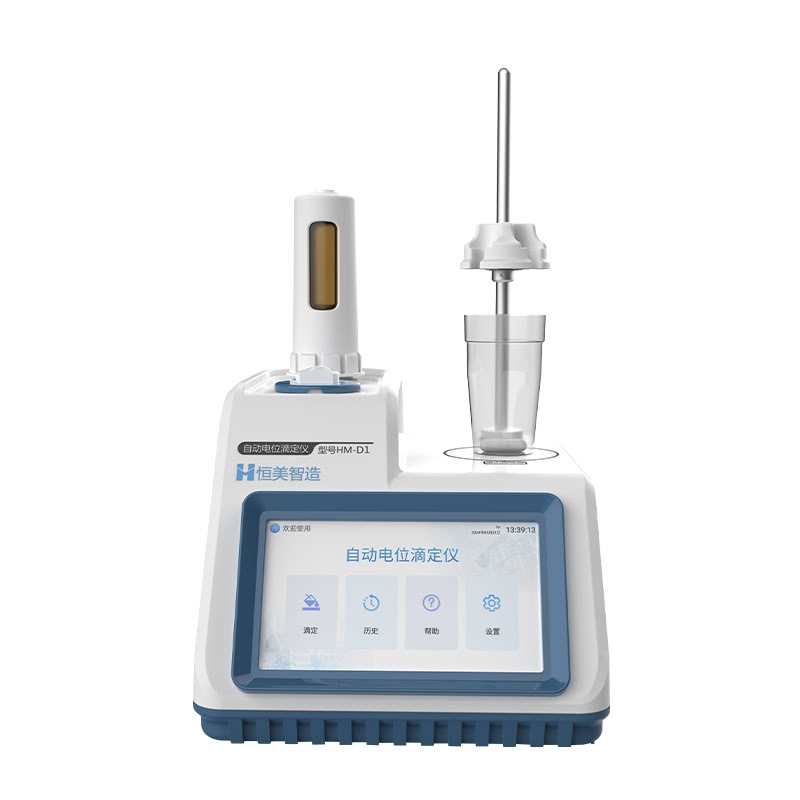
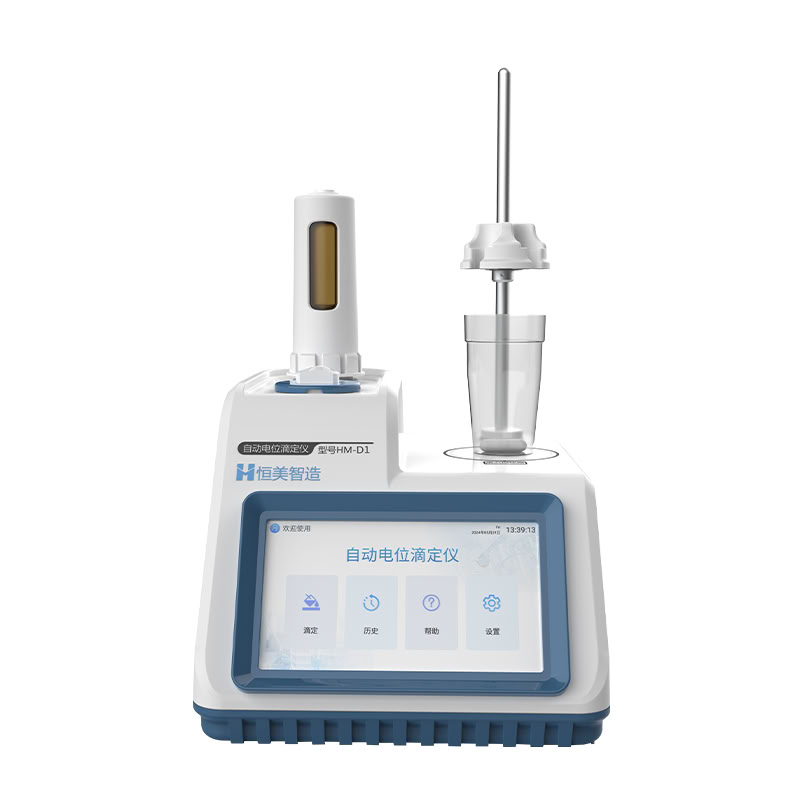
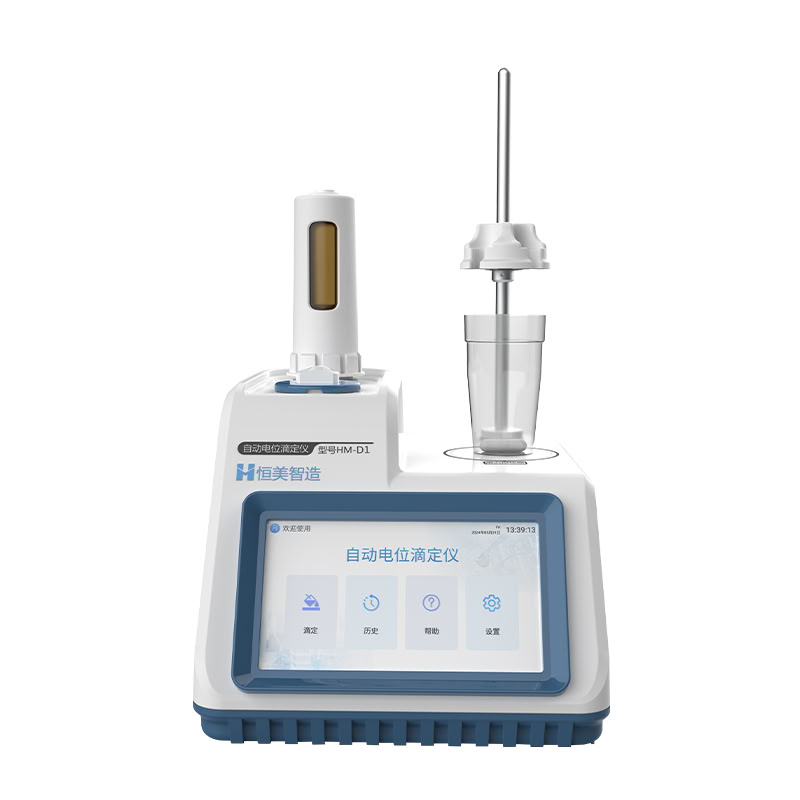
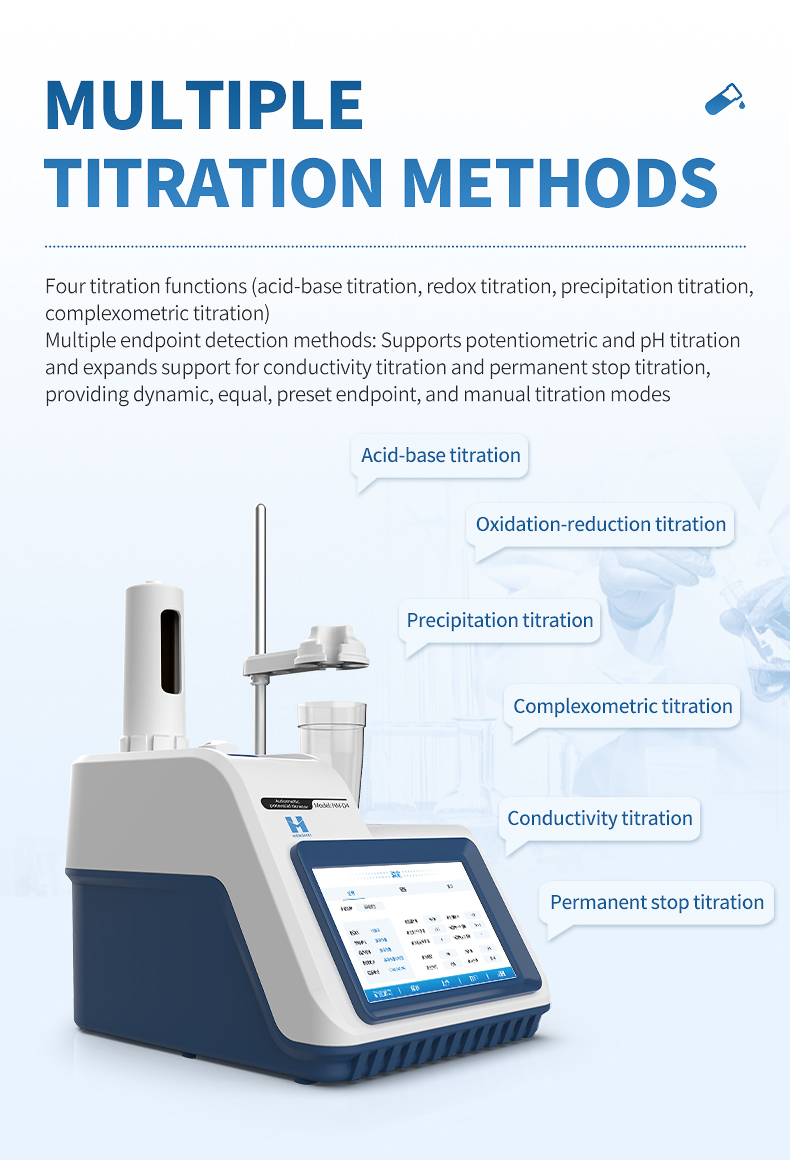
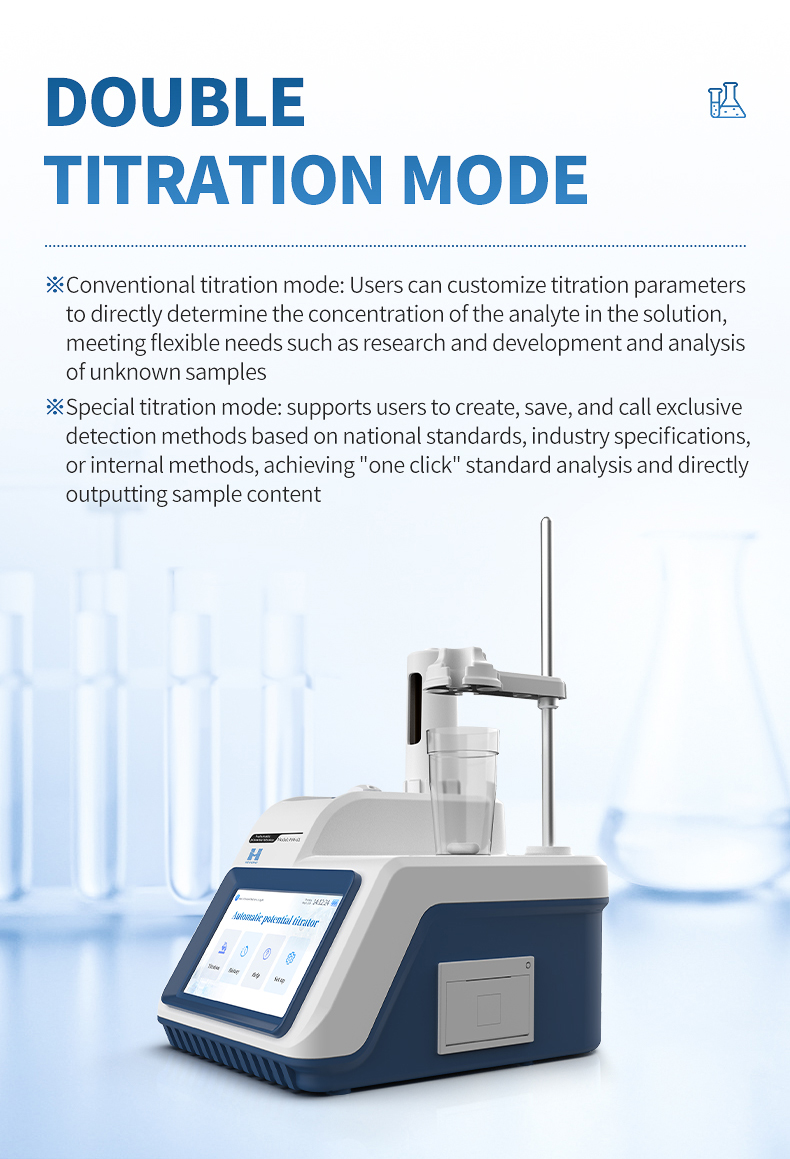
The HM-D4 Multi-Function Automatic Potentiometric Titrator eliminates this fragmentation by consolidating all six titration methods and four detection modes into a single, comprehensive analytical workstation. The four fundamental methods (acid-base, redox, precipitation, complexometric) operate via standard potentiometric detection, while the integrated conductivity module (0.00 μS/cm to 2,000 mS/cm) handles weak acid-base systems and ion concentration analysis, and the dead-stop module (30/50/100 mV polarization, 0.00–200 μA current) addresses pharmacopeia-required iodometric and diazotization assays.
For laboratory managers, this consolidation delivers measurable operational benefits: a single validation protocol instead of three, one set of calibration procedures instead of multiple, unified data management with 100,000-record storage and complete audit trail, and standardized operator training across all method types. The Android 10 platform's method library stores pre-configured protocols for each industry's standard methods — from GB food safety standards to USP pharmacopeia assays to ASTM environmental protocols — enabling any trained technician to execute any method with one-click simplicity.
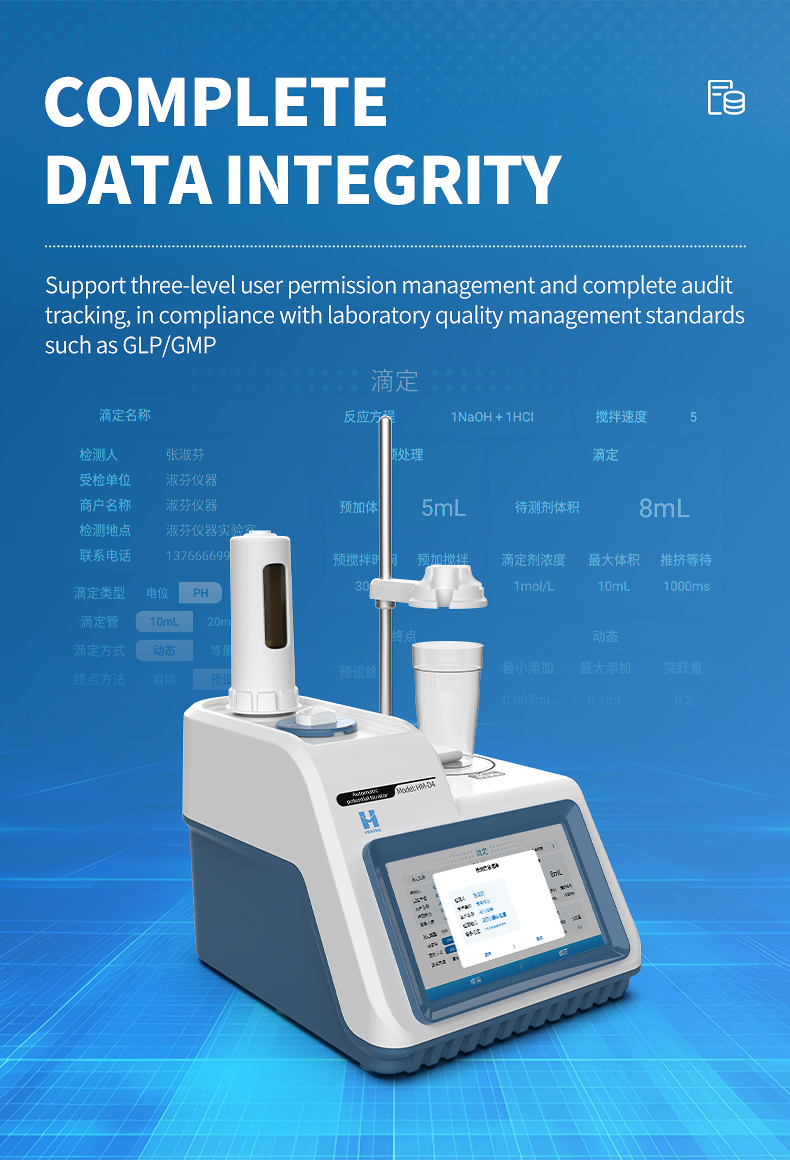
The HM-D4's full GLP/GMP compliance infrastructure — three-level permissions, immutable audit trail, electronic signatures, power-off data protection, and system self-diagnosis — ensures that regardless of which industry's regulatory framework applies, the instrument meets the documentation and data integrity requirements. This makes the HM-D4 particularly valuable for contract testing laboratories, third-party inspection agencies, and multi-disciplinary research institutions that must demonstrate compliance across diverse accreditation standards simultaneously.
Applications
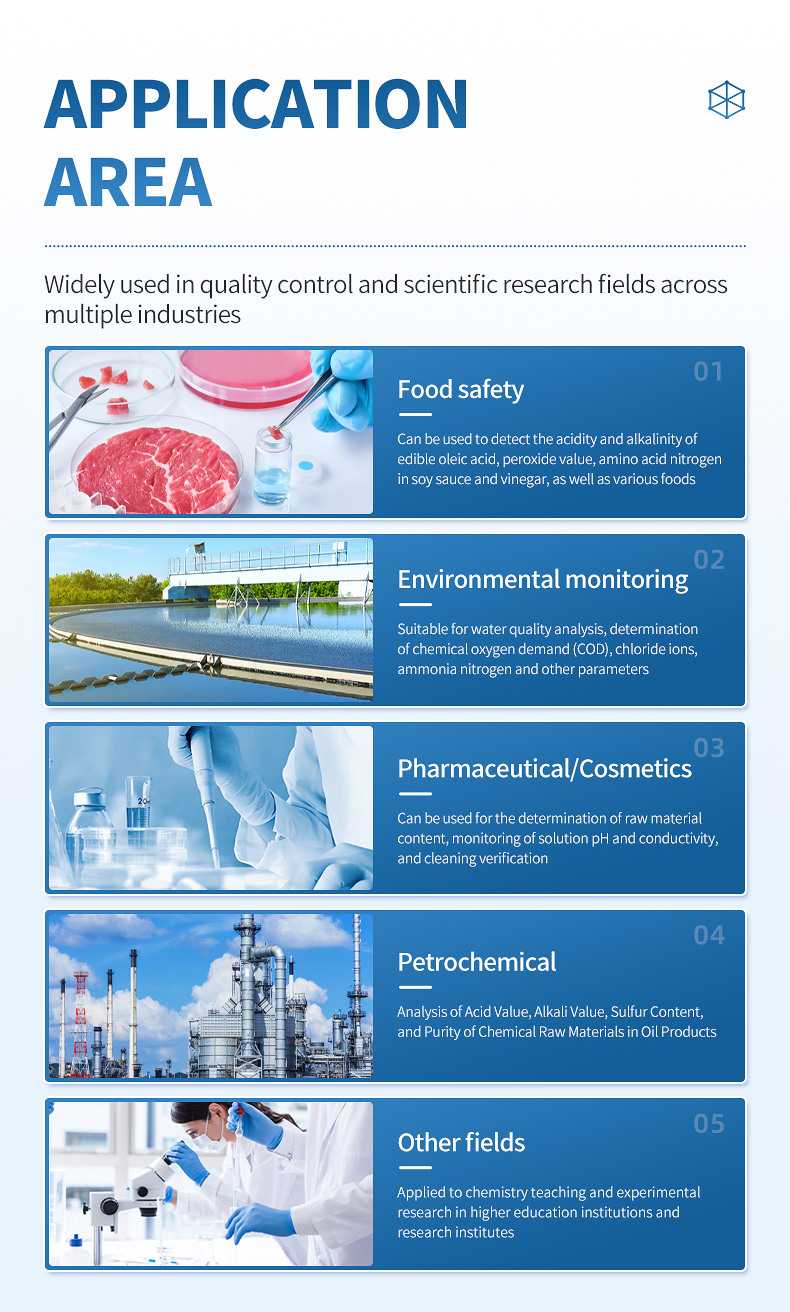
Contract Testing Laboratories: Serve food safety, pharmaceutical, environmental, and industrial clients from a single instrument, reducing per-test capital cost and enabling competitive pricing for diverse service contracts
Pharmaceutical Full-Spectrum QC: Execute every pharmacopeia-required titration type — iodometry, diazotization, acid-base, non-aqueous, complexometric — with dead-stop and potentiometric detection in one validated system
Food Safety Comprehensive Testing: Acid value, peroxide value, amino acid nitrogen, sulfite, chloride, and metal ion analysis across diverse food matrices using the optimal detection method for each analyte
Environmental Water Quality Panels: COD, alkalinity speciation, chloride, ammonia nitrogen, and conductivity-based monitoring with both potentiometric and conductometric endpoint options
Petrochemical Raw Material Analysis: Oil acid number, base number, sulfur content, and chemical intermediate purity using redox and precipitation methods
University Teaching & Research: Demonstrate all six titration techniques in undergraduate labs; provide flexible multi-detection platform for graduate research projects
Third-Party Inspection Agencies: Meet ISO 17025 accreditation requirements across multiple testing scopes with a single validated, fully documented analytical system
Key Features & Advantages
Complete Method Consolidation: Six titration methods with four detection modes in one instrument — eliminates the need for separate potentiometric, conductivity, and dead-stop titrators, reducing capital expenditure by up to 60%.
Cross-Industry Method Library: Pre-configured templates for food safety (GB standards), pharmaceutical (USP/EP/ChP), environmental (EPA/ASTM), and petrochemical (ASTM/ISO) methods — one-click access to industry-standard protocols.
Multi-Detection Versatility: Potentiometric (±2,000 mV), pH (0–14), conductivity (0–2,000 mS/cm), and amperometric (0–200 μA) detection channels available simultaneously, allowing analysts to choose the optimal endpoint method for each sample.
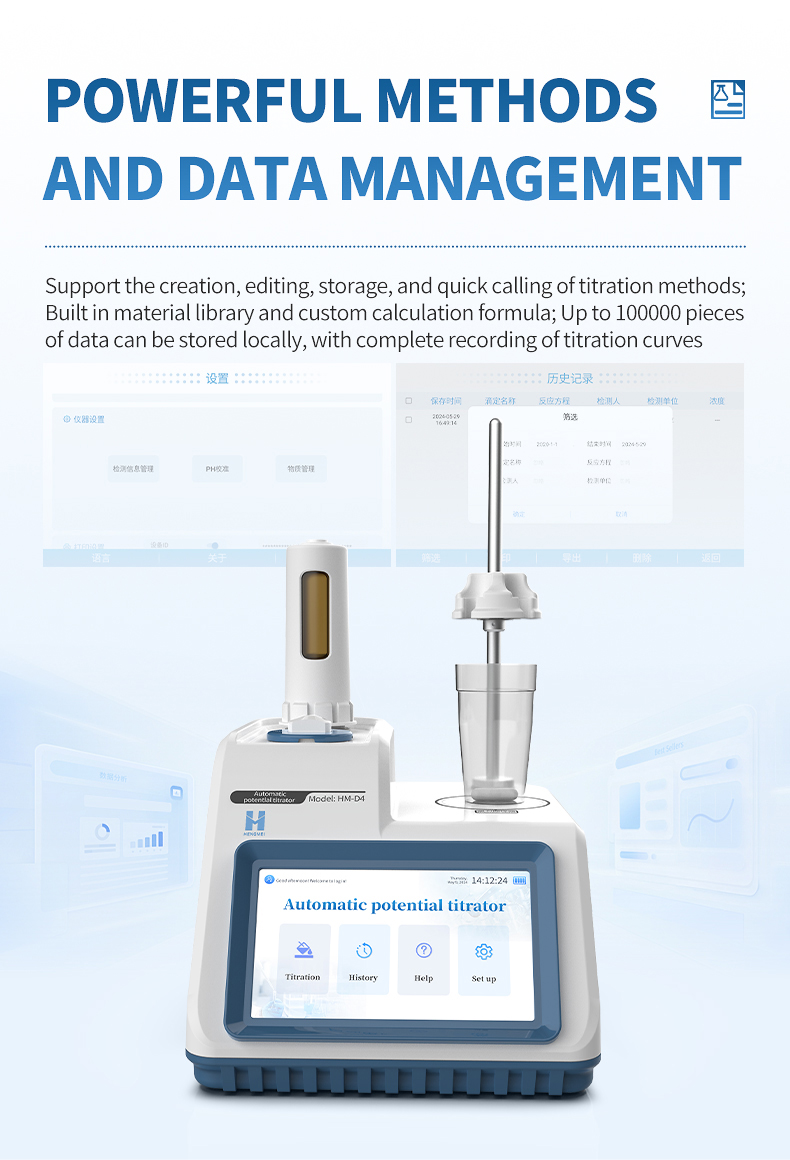
Unified Data Management: Single 100,000-record database covers all method types; substance library, custom formula engine, and titration curve storage organized by project, method, and operator for efficient retrieval.
Multi-Accreditation Compliance: Full GLP/GMP suite meets FDA 21 CFR Part 11, EU GMP Annex 11, and ISO 17025 data integrity requirements simultaneously — critical for laboratories holding multiple accreditations.
Single Validation Protocol: One installation qualification (IQ), operational qualification (OQ), and performance qualification (PQ) covers all six methods, reducing validation time and cost by approximately 70% versus validating three separate instruments.
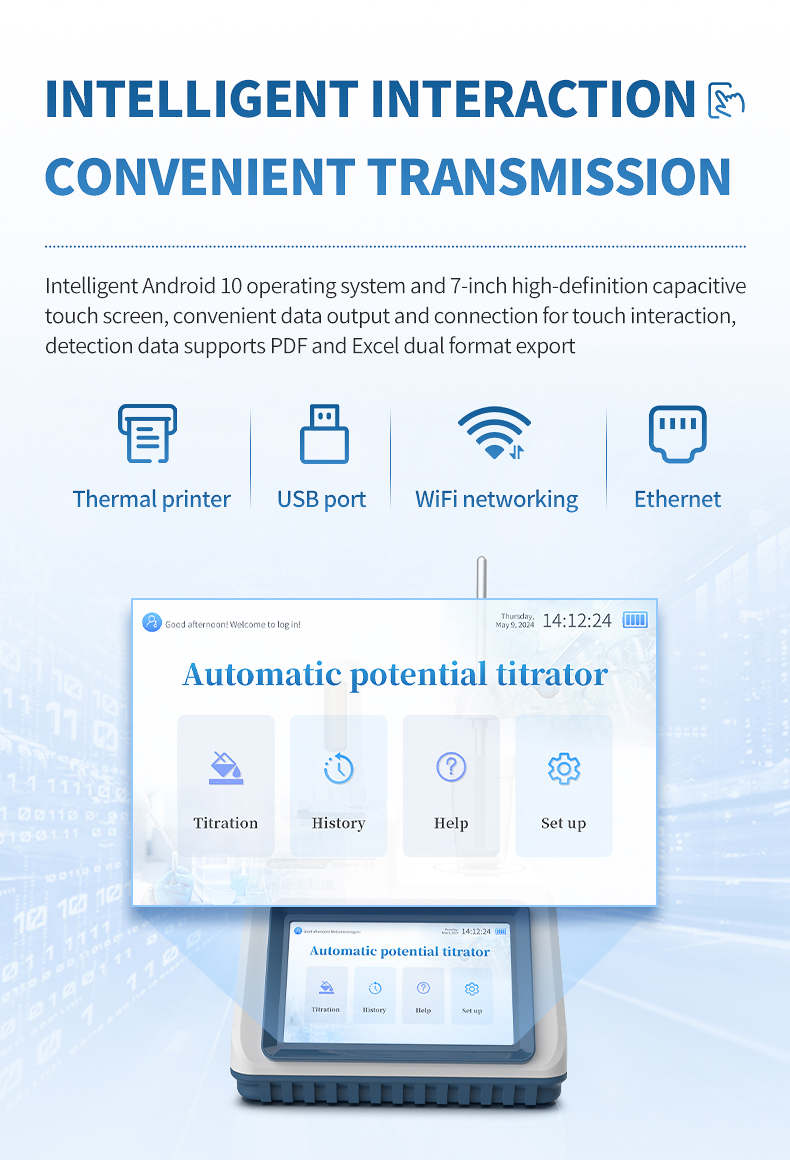
Android 10 Multi-Parameter Display: 7-inch touchscreen shows real-time curves for any detection mode; dual-curve overlay allows simultaneous comparison of potentiometric and conductivity signals during method development.
Automated High-Throughput Operation: Automatic titrant dispensing, endpoint detection, result calculation, and report generation — combined with the method library, a single technician can handle 50+ diverse samples per shift.
Flexible Export Ecosystem: PDF batch records, Excel statistical exports, Wi-Fi LIMS integration, USB archiving, and built-in thermal printer — all documentation formats required across different industries and accreditation bodies.
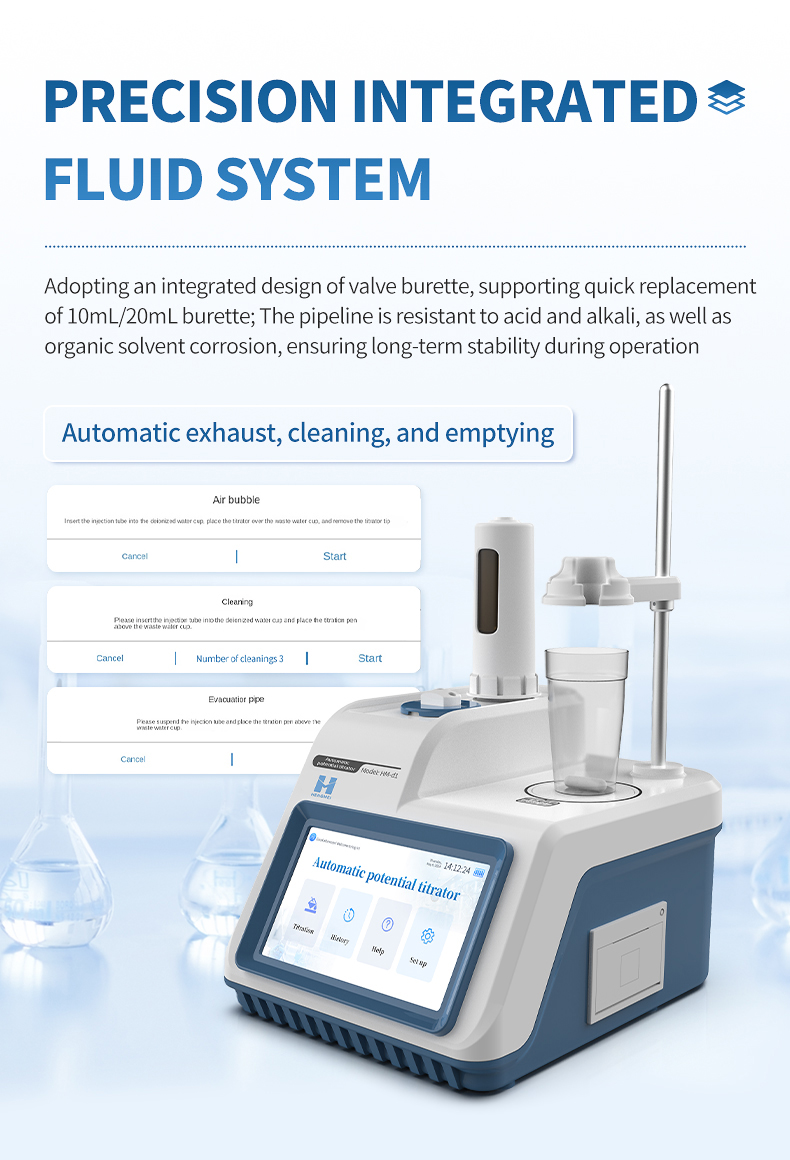
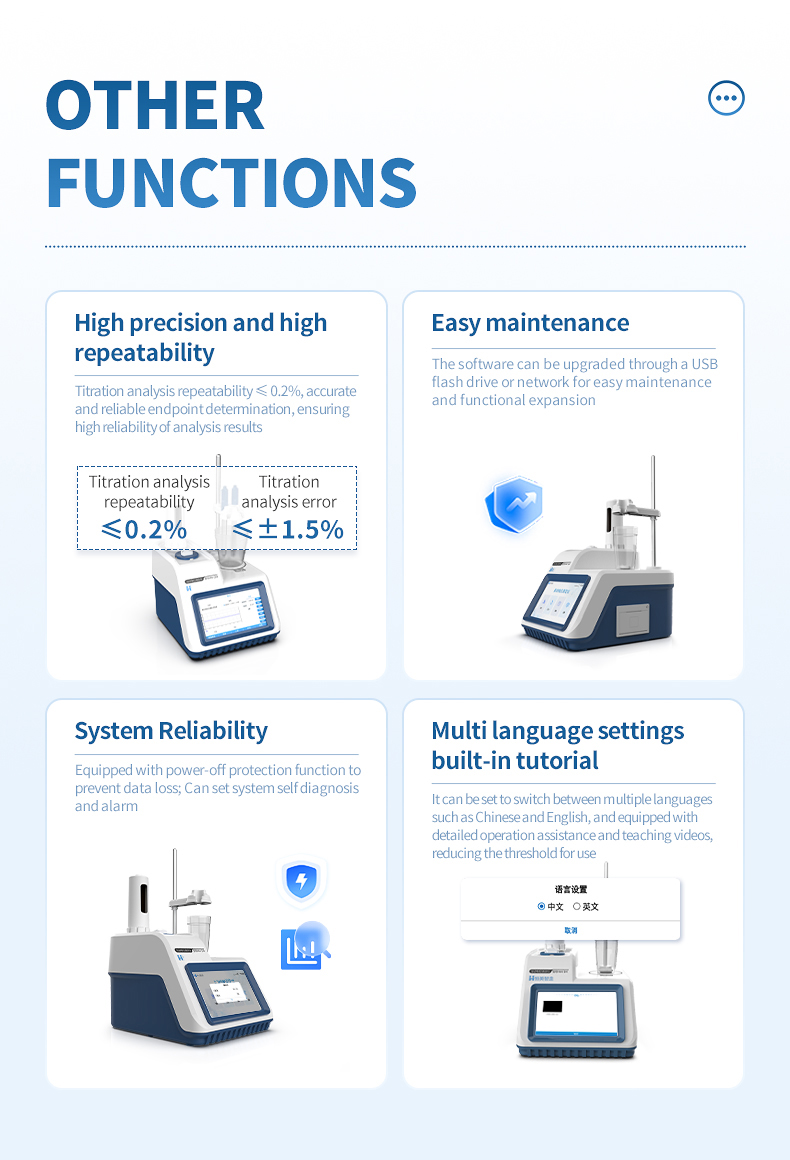
Precision Fluid System: ≤0.2% repeatability, ±1.5% analysis error, corrosion-resistant tubing, automatic degassing, cleaning, and pipe evacuation — consistent performance across all reagent chemistries.
Consolidated Training: One training program covers all six methods; built-in tutorial videos and operation help reduce onboarding time for new analysts by approximately 50%.
Scalable Architecture: Start with the full six-method platform; future software updates and hardware accessories extend capability as laboratory service scope expands.
Reduced Total Cost of Ownership: One maintenance contract, one calibration schedule, one set of spare parts, one training program — significant ongoing operational savings versus multi-instrument configurations.
Technical Specifications
| Parameter | Specification |
|---|---|
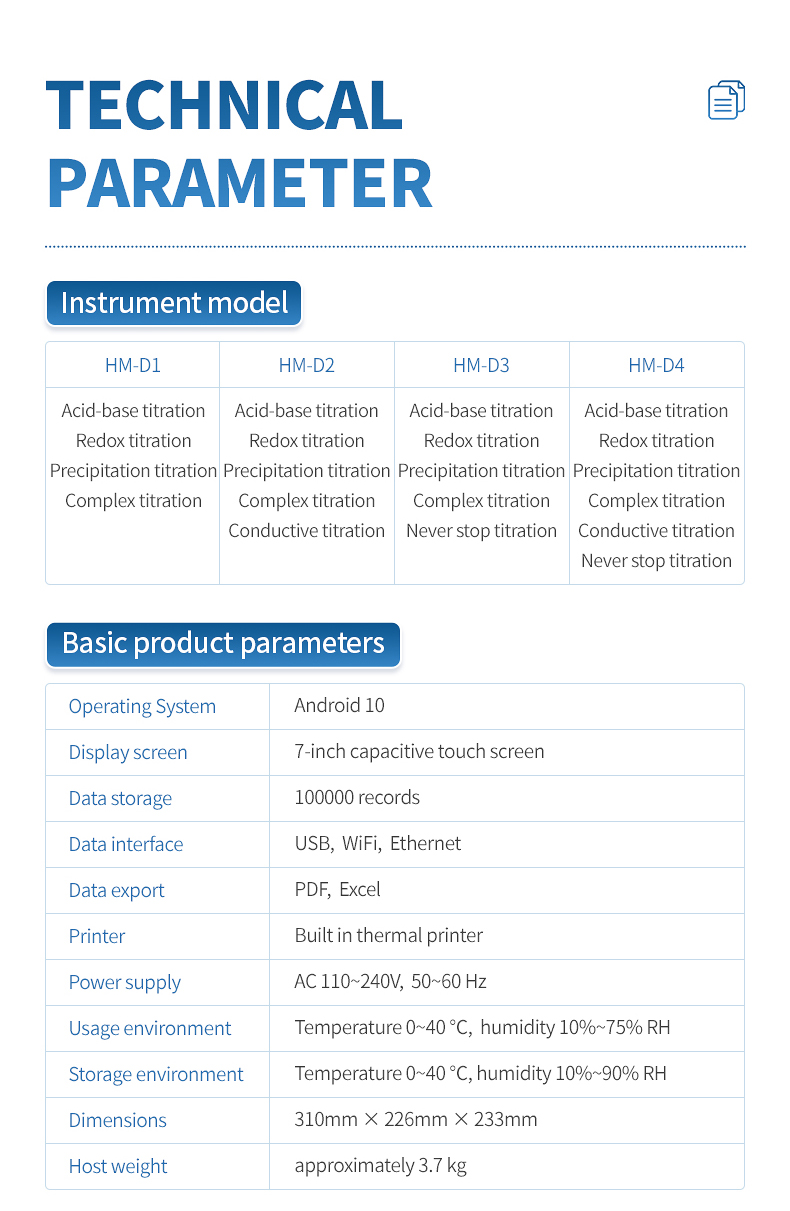
| Titration Methods | Acid-base, Redox, Precipitation, Complexometric, Conductivity, Dead-stop |
| Detection Modes | Potentiometric, pH, Conductivity, Amperometric (dead-stop) |
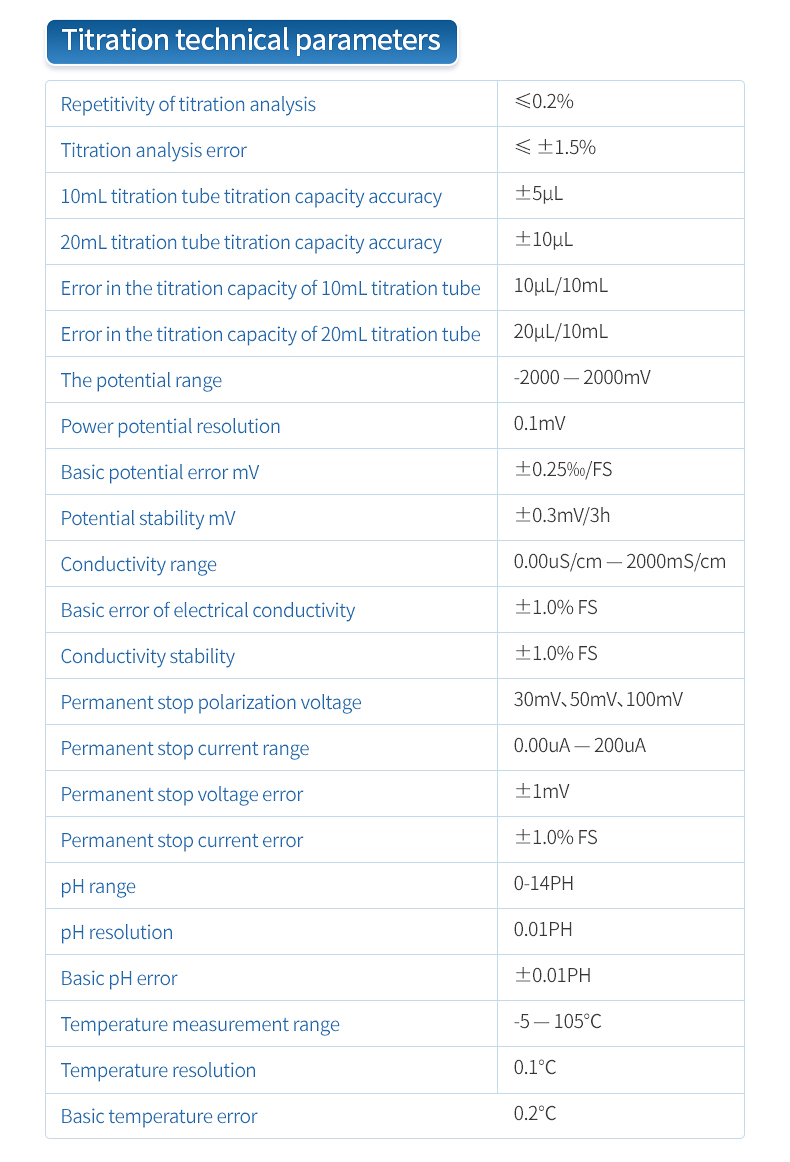
| Repeatability | ≤ 0.2% |
| Analysis Error | ≤ ±1.5% |
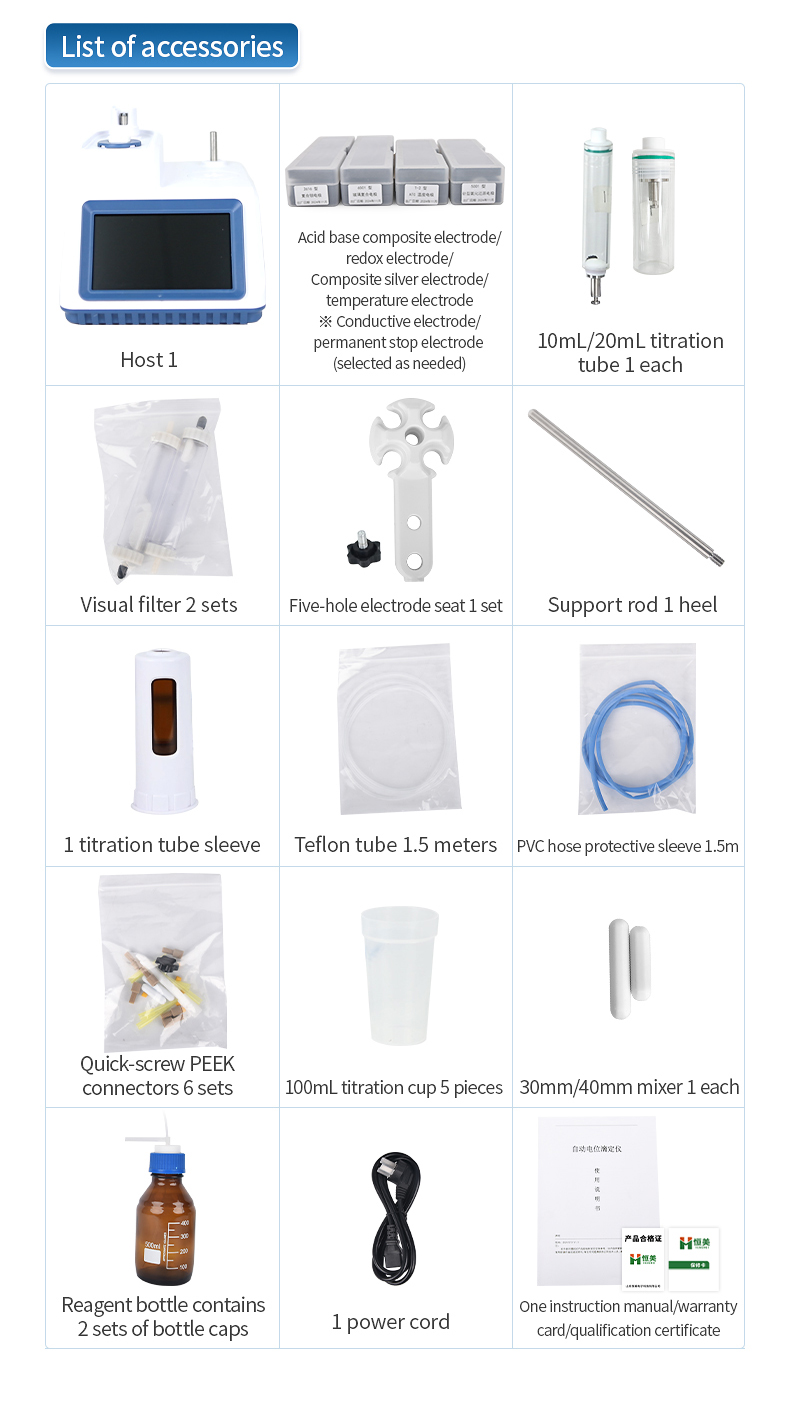
| Burette Options | 10 mL (±5 μL) / 20 mL (±10 μL), quick-swap |
| Potential Measurement | -2,000~+2,000 mV, 0.1 mV resolution, ±0.25‰ FS |
| pH Measurement | 0~14 pH, 0.01 pH resolution, ±0.01 pH accuracy |
| Conductivity Range | 0.00 μS/cm ~ 2,000 mS/cm, ±1.0% FS |
| Conductivity Stability | ±1.0% FS |
| Dead-Stop Polarization | 30 mV, 50 mV, 100 mV (±1 mV) |
| Dead-Stop Current Range | 0.00 μA ~ 200 μA, ±1.0% FS |
| Temperature | -5~105 °C, 0.1 °C resolution, ±0.2 °C accuracy |
| Endpoint Detection | Dynamic, equal-volume, preset endpoint, manual modes |
| Display | 7-inch capacitive touchscreen, Android 10 |
| Data Storage | 100,000 records with full titration curves |
| Data Export | PDF, Excel, built-in thermal printer |
| Connectivity | USB, Wi-Fi, Ethernet |
| Power | AC 110~240V, 50~60 Hz (universal) |
| Operating Conditions | 0~40 °C, 10%~75% RH |
| Storage Conditions | 0~40 °C, 10%~90% RH |
| Dimensions | 310×226×233 mm |
| Weight | ~3.7 kg |
FAQ
Q1: How many separate instruments does the HM-D4 replace in a typical multi-industry laboratory?
In a laboratory that previously maintained separate potentiometric, conductivity, and dead-stop titrators, the HM-D4 replaces all three with a single instrument. This consolidation typically saves 60% in capital equipment costs, reduces bench space by approximately two-thirds, and eliminates duplicated calibration and validation schedules. For labs that only had a basic potentiometric titrator, the HM-D4 adds conductivity and dead-stop capabilities without requiring additional instruments.
Q2: Can the HM-D4 handle both pharmaceutical pharmacopeia methods and food safety standards on the same day?
Absolutely. The HM-D4's method library stores protocols for both industries simultaneously. A morning pharmaceutical iodometric assay using dead-stop detection at 50 mV polarization can be followed by an afternoon food safety acid value test using potentiometric detection — the technician simply selects the appropriate method on the touchscreen. The quick-swap burette system and automatic cleaning routine handle reagent changeover in under two minutes, and all results are stored in the unified database with industry-specific report templates.
Q3: How does instrument consolidation affect ISO 17025 accreditation for contract testing labs?
Instrument consolidation with the HM-D4 actually simplifies ISO 17025 accreditation management. Instead of maintaining separate calibration certificates, measurement uncertainty budgets, and method validation records for three instruments, the laboratory maintains one comprehensive set of documentation. The HM-D4's audit trail and data integrity features directly support ISO 17025 requirements for result traceability, equipment qualification, and data security. The single IQ/OQ/PQ validation protocol covers all six methods under one document control number.
Q4: What happens if one detection module needs service — does the entire instrument go offline?
The HM-D4's modular architecture allows each detection module to operate independently. If the conductivity probe requires replacement, the potentiometric and dead-stop modules continue functioning normally. Similarly, if the dead-stop electrodes need servicing, acid-base and redox titrations proceed unaffected. The system self-diagnosis feature identifies the specific module requiring attention and generates an alert, while the remaining modules maintain full analytical capability — minimizing instrument downtime.
Q5: Is the HM-D4 suitable for university teaching laboratories that need to cover all titration techniques?
The HM-D4 is ideal for teaching environments because it allows students to experience all six titration methods and four detection modes on one instrument. The Android 10 interface's built-in tutorial videos guide students through each method's principles and procedures. Instructors can create simplified method templates that limit parameter adjustments for introductory courses, then unlock full parameter control for advanced analytical chemistry classes. The 100,000-record storage means multiple student sections can run experiments without data management conflicts.
Q6: How does the HM-D4's data management system handle results from different industries?
The HM-D4's database organizes results by project, method, and operator, with custom tags for industry classification. Pharmaceutical results include full audit trail metadata for GMP compliance; food safety results link to specific GB standard methods; environmental results carry sampling location and chain-of-custody data fields. All results can be filtered, searched, and exported independently — so a pharmaceutical auditor sees only pharma records, while an environmental inspector accesses only environmental data, all from the same instrument database.
Address of this article:https://labinstruments.net/pro24/six-method-titrator-multi-industry-laboratory.html
- Previous: HM-D3 Dead-Stop Titrator for Pharmaceutical QA/QC Iodometric and Diazotization Analysis
- Next: no more