

 Current
location:
Current
location: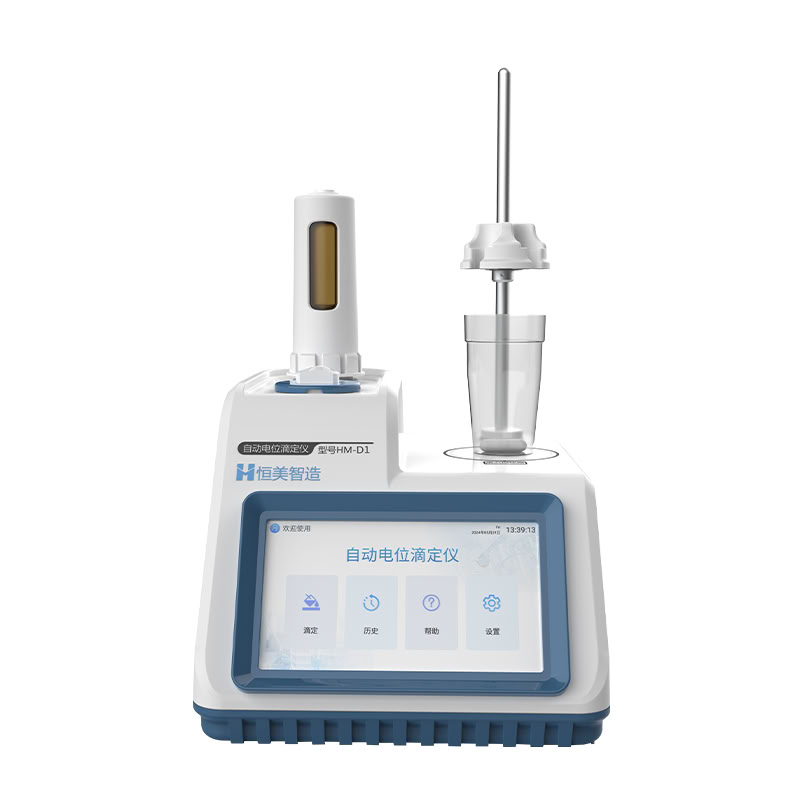
 +86 17853698681
Product Introduction
Water treatment facilities and pharmaceutical manufacturing laboratories face a persistent analytical challenge: many critical titration endpoints involve weak acids or weak bases whose potentiometric signals are too subtle for reliable detection. In boiler water conditioning, for example, the transition between carbonate and bicarbonate alkalinity produces only a gradual pH shift that traditional glass electrodes struggle to pinpoint. Similarly, pharmaceutical raw materials such as weak organic acids often yield titration curves with poorly defined inflection points, forcing technicians to rely on time-consuming back-titration workarounds or less accurate indicator methods.
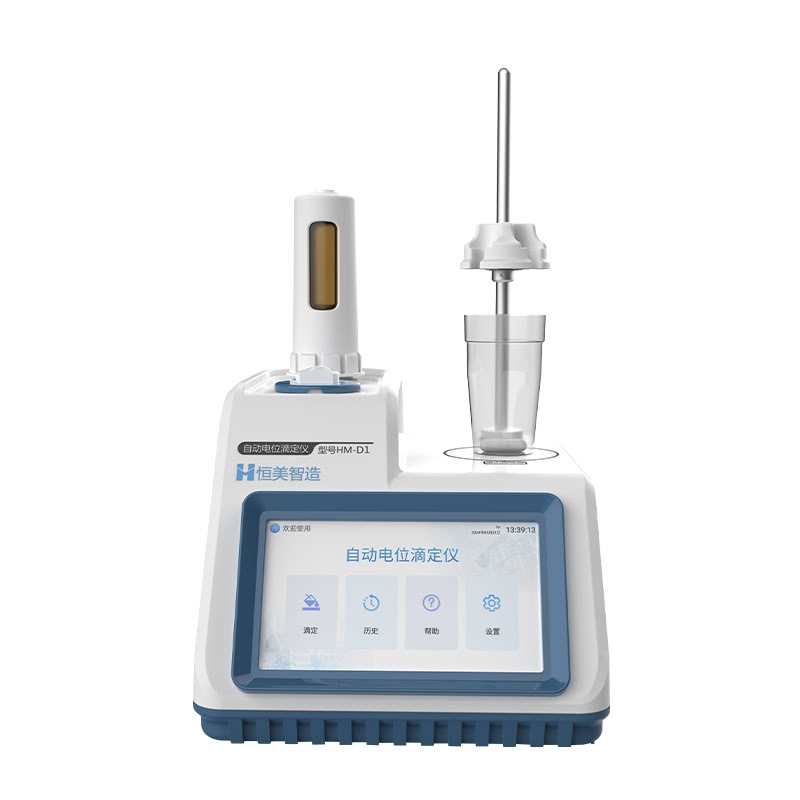
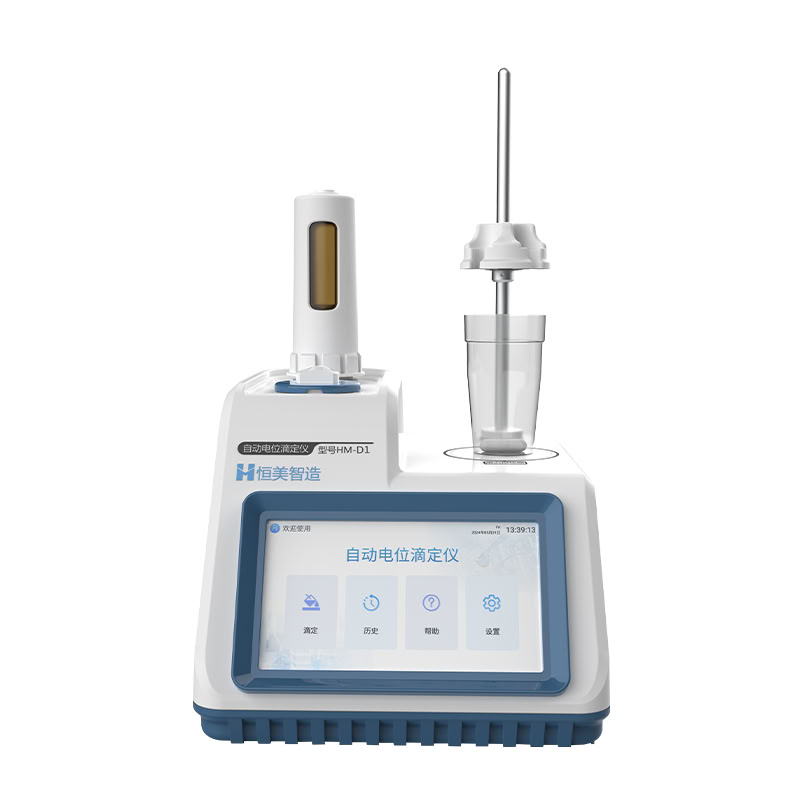
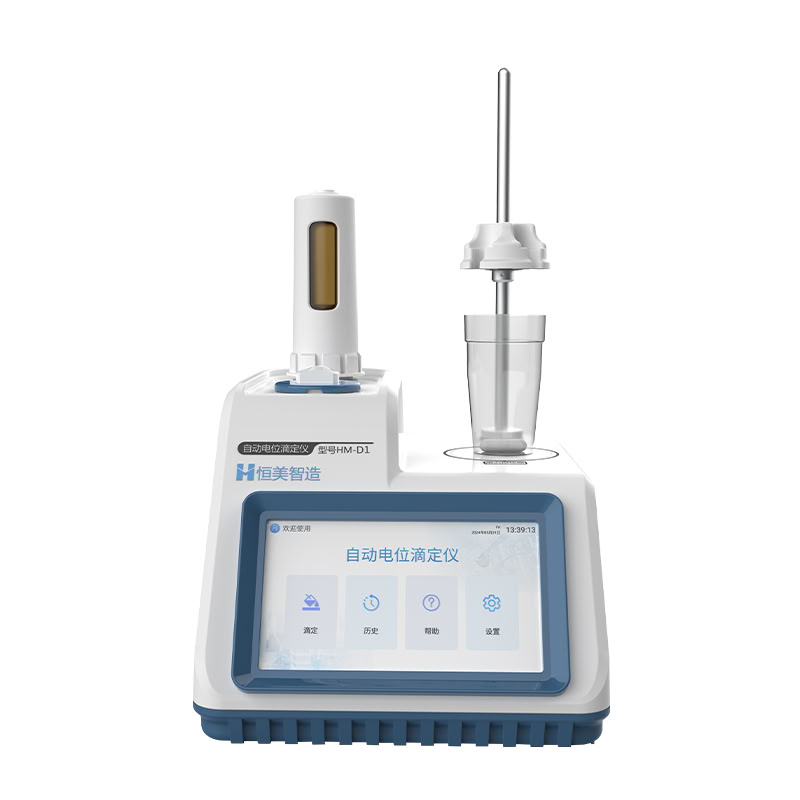
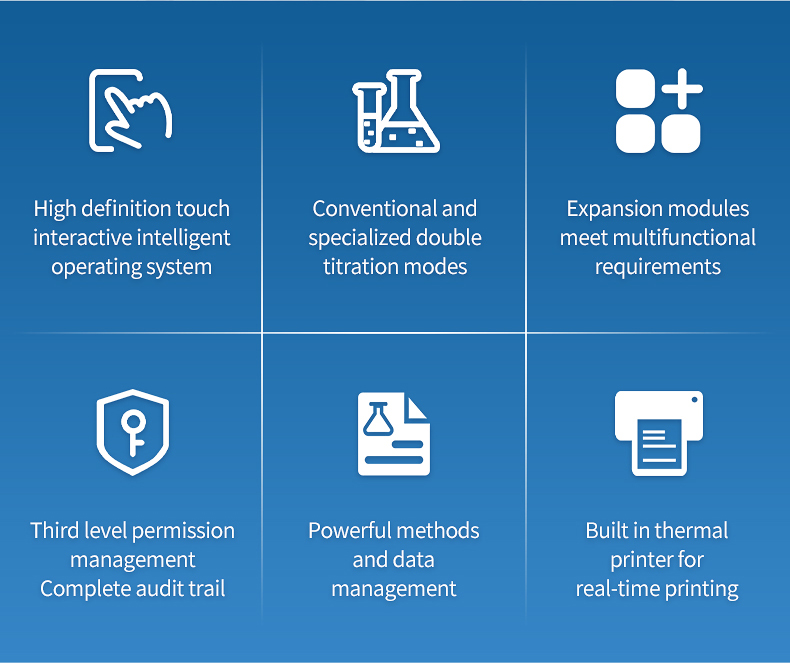
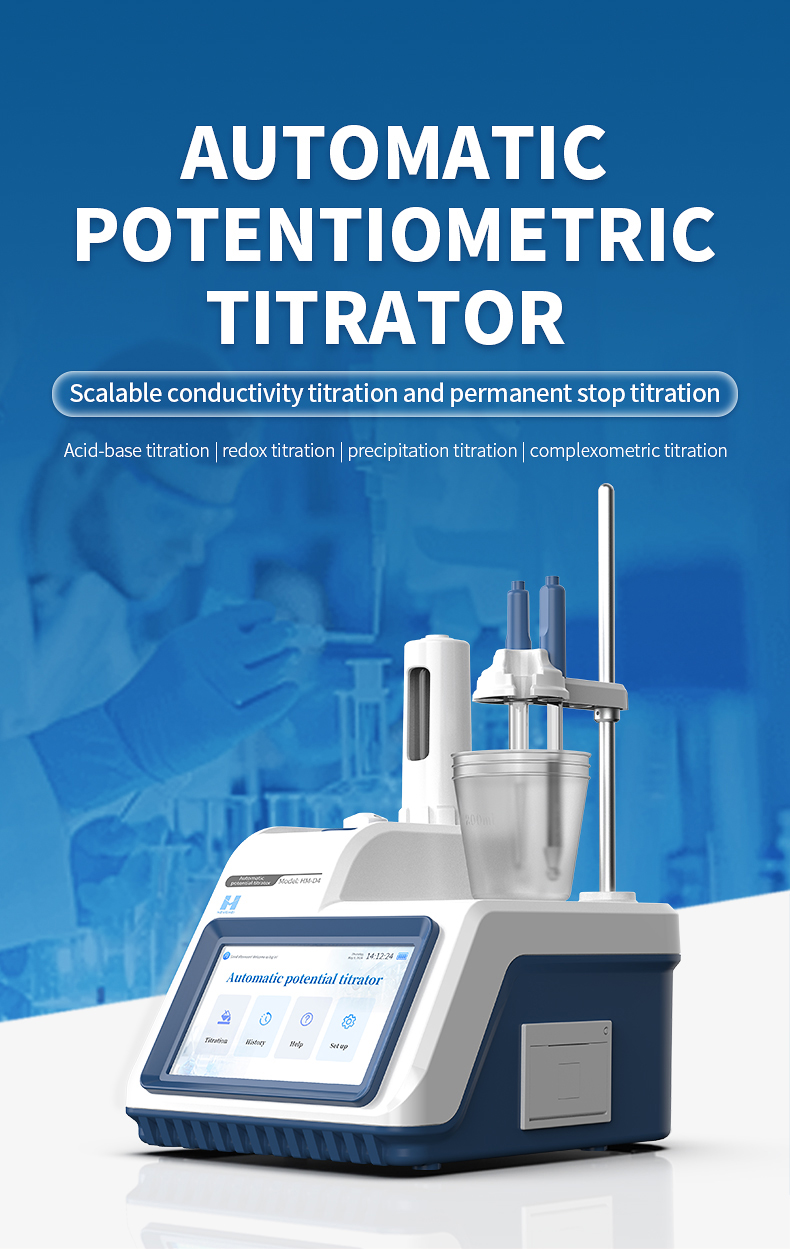
The HM-D2 Automatic Potentiometric Titrator with Conductivity Detection resolves these analytical blind spots by adding a second, independent detection channel. The integrated conductivity module monitors changes in ionic species concentration throughout the titration process, identifying the equivalence point through the sharp conductivity inflection that occurs when the dominant ion population shifts — regardless of acid or base strength. With a measurement range of 0.00 μS/cm to 2,000 mS/cm and ±1.0% FS accuracy, the module covers everything from ultrapure water characterization to concentrated process stream analysis.
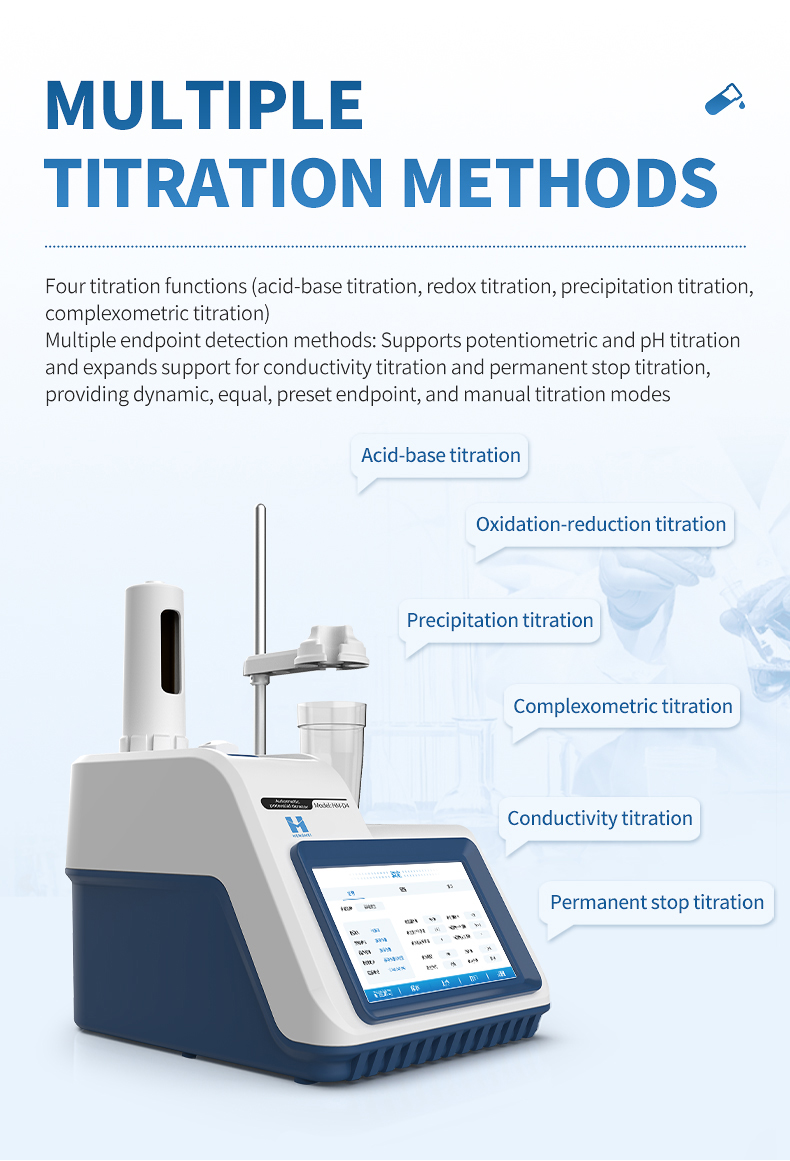
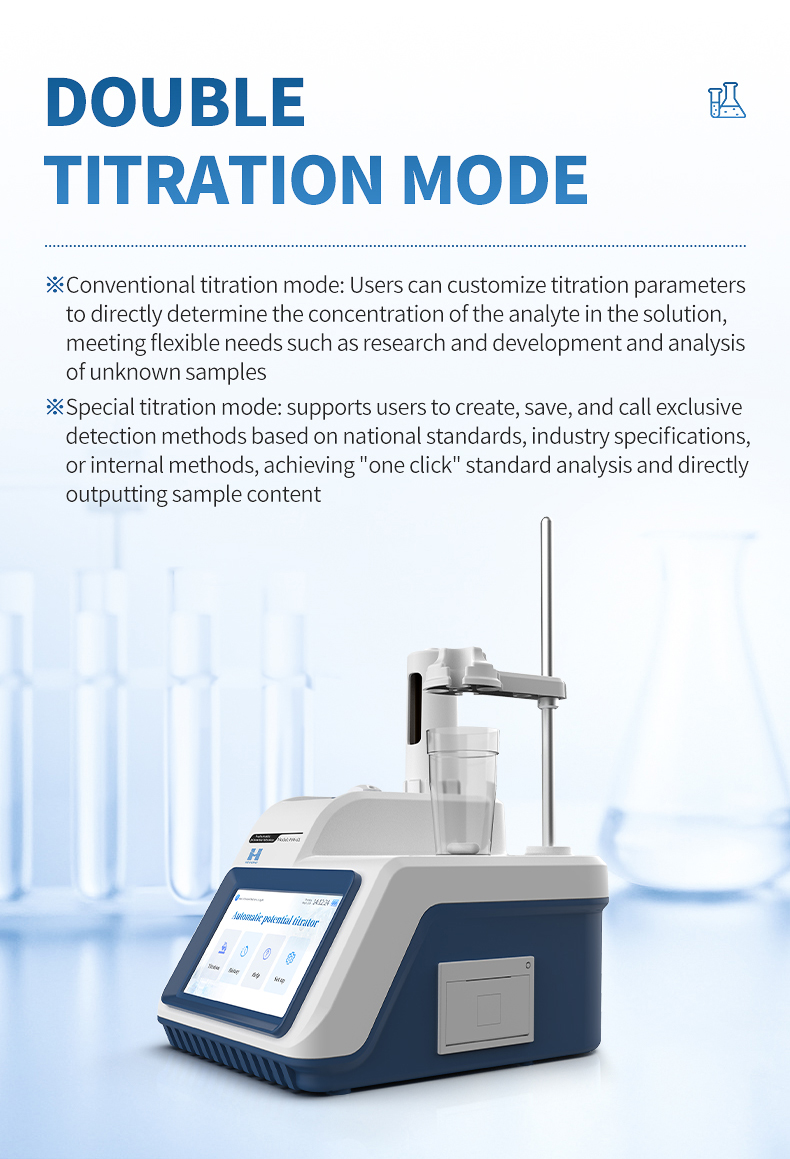
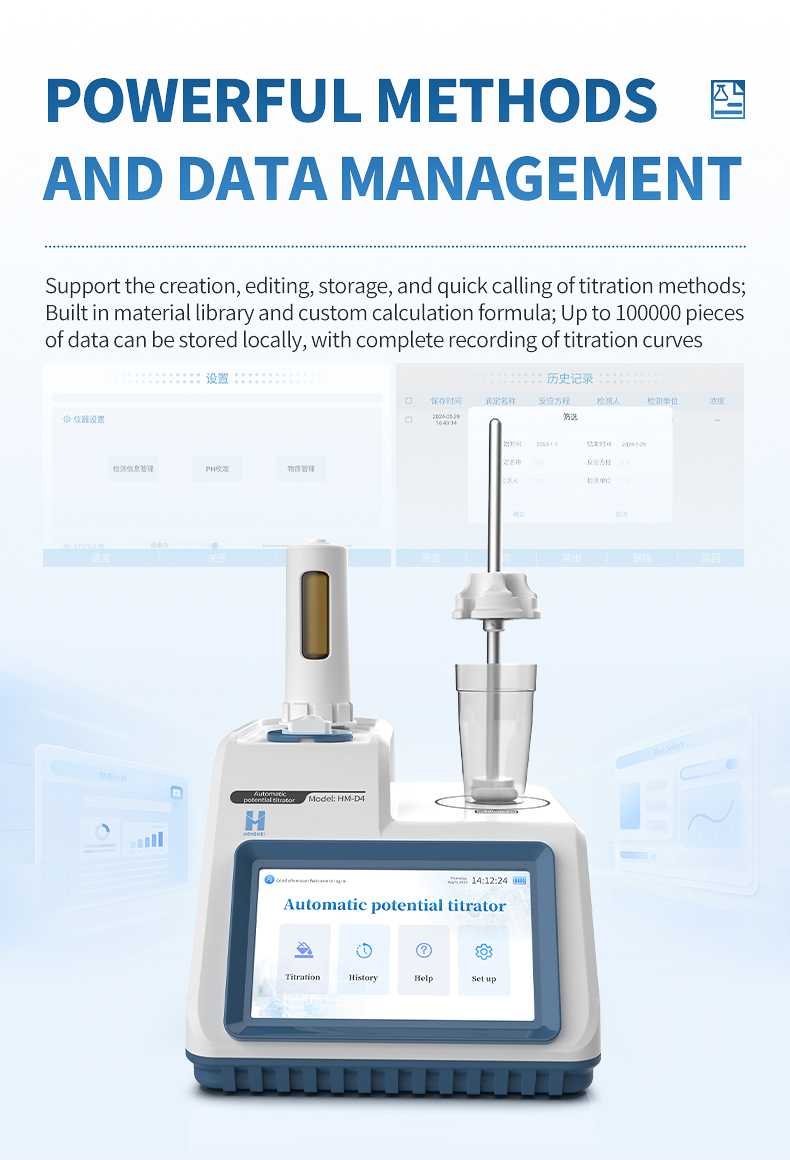
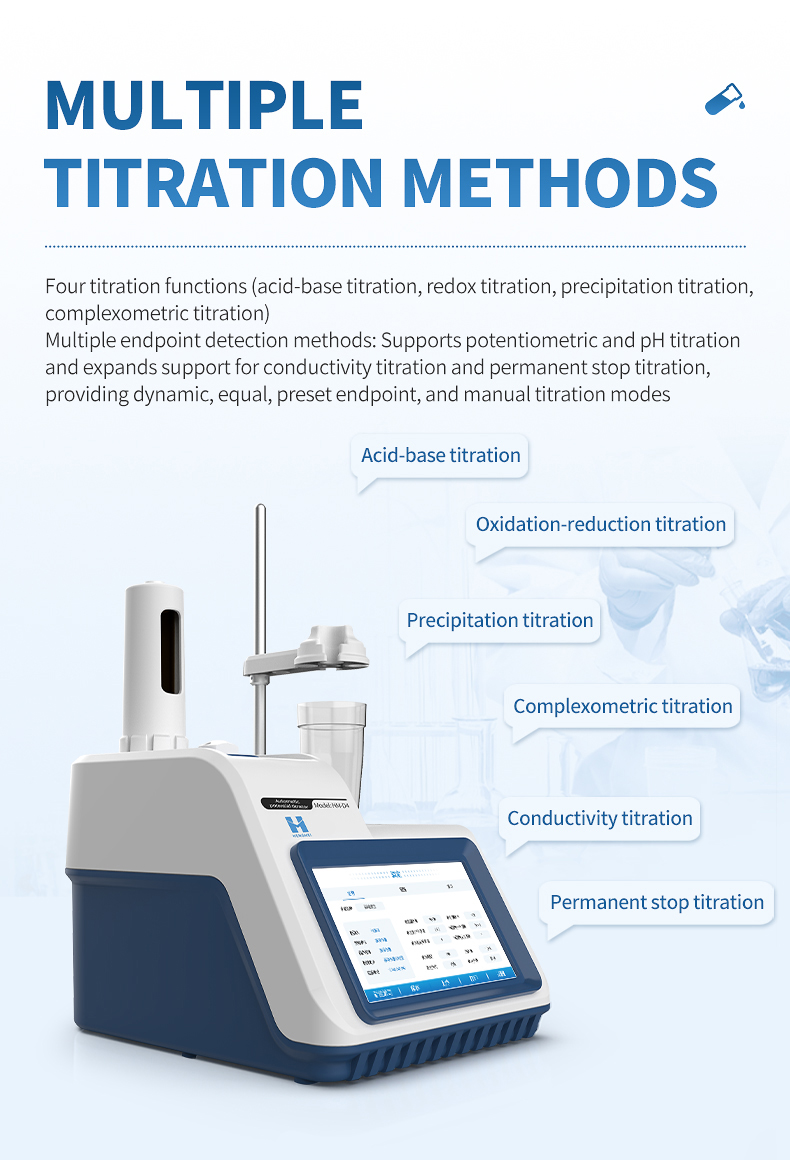
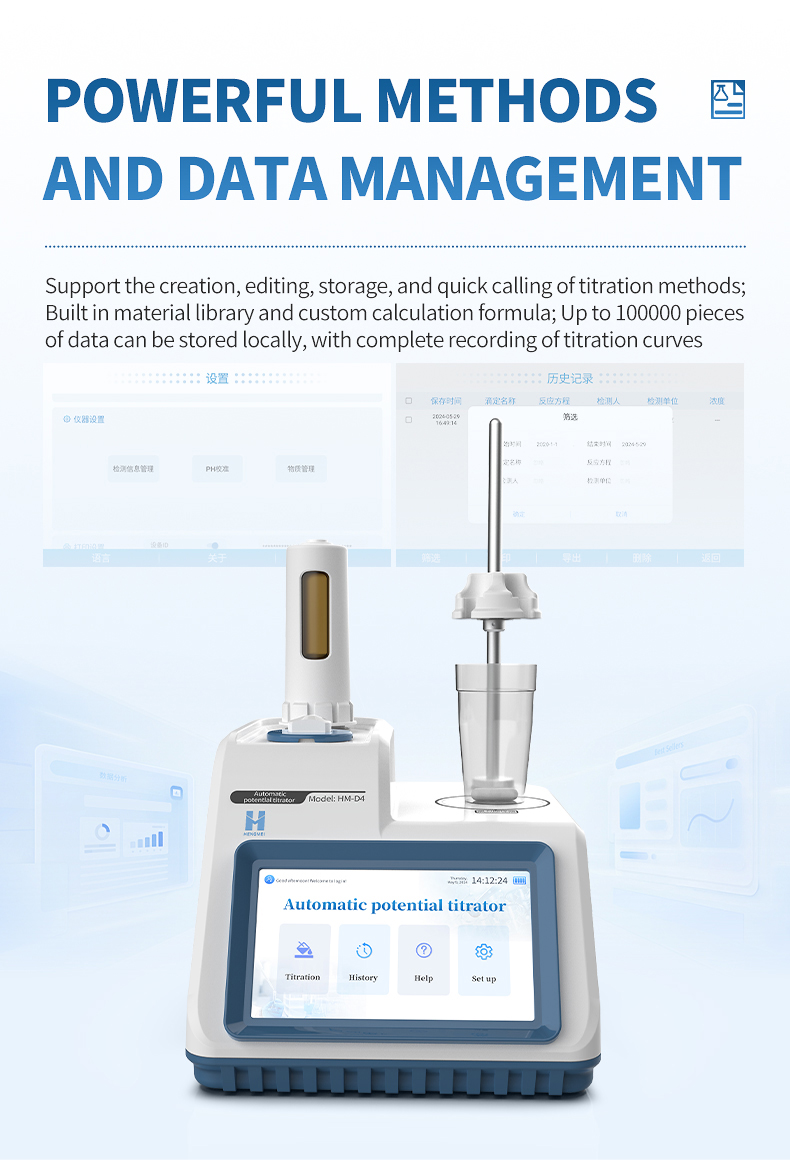
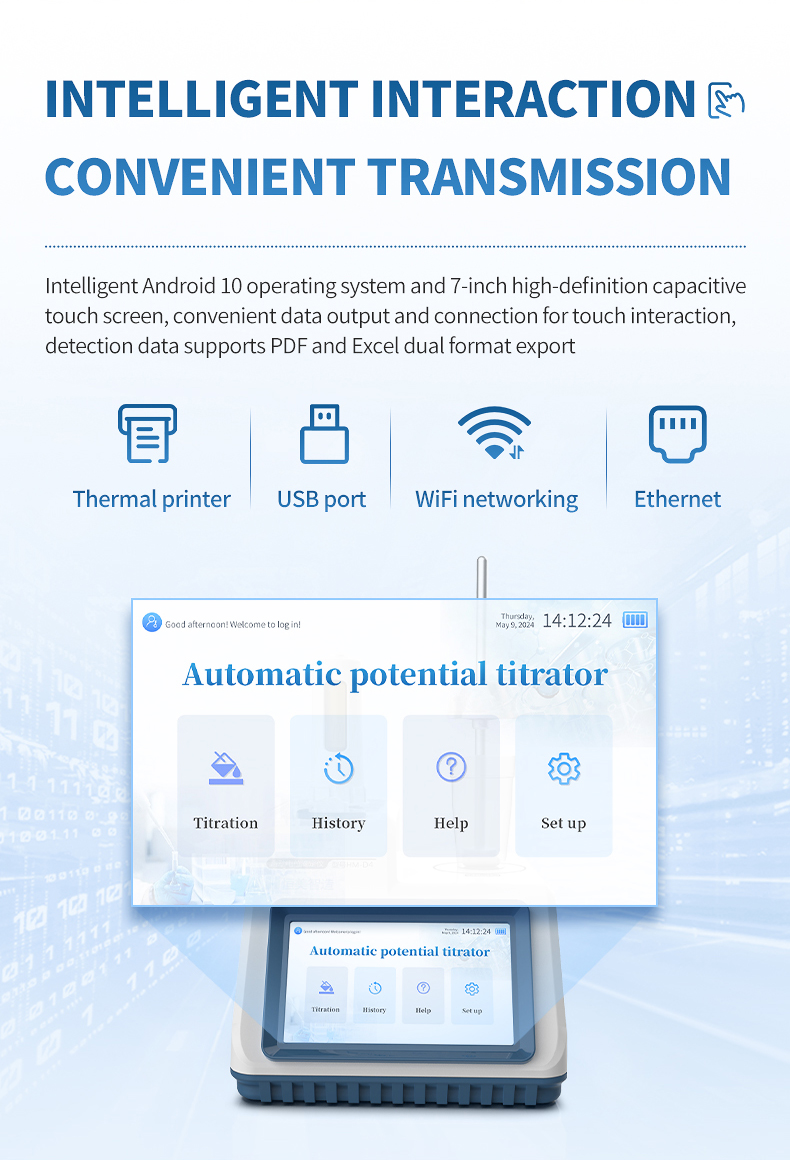
Beyond conductometric titration, the HM-D2 retains all four fundamental titration methods — acid-base, redox, precipitation, and complexometric — making it a versatile five-method analytical platform for laboratories that need both standard potentiometric and specialized conductivity workflows. The Android 10 operating system, 7-inch touchscreen, 100,000-record storage, and comprehensive GLP/GMP data integrity suite ensure seamless integration into regulated pharmaceutical and environmental monitoring operations.
For water treatment plants specifically, the HM-D2's conductivity module serves double duty: it functions as a standalone conductivity meter for routine water quality checks (meeting ISO 7888 and ASTM D1125 requirements) while also enabling advanced conductometric titration methods for alkalinity speciation, ion exchange capacity testing, and coagulant dosage optimization — all from a single compact instrument.
Applications
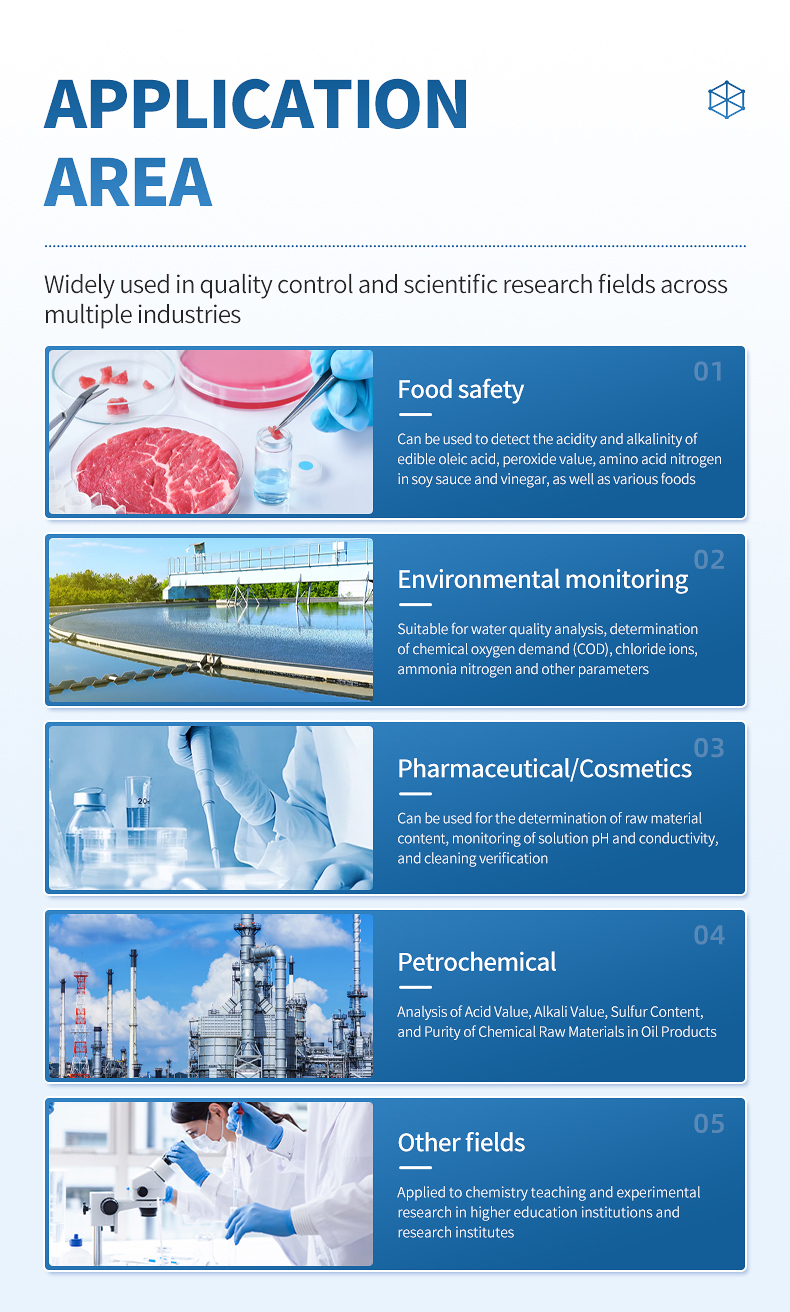
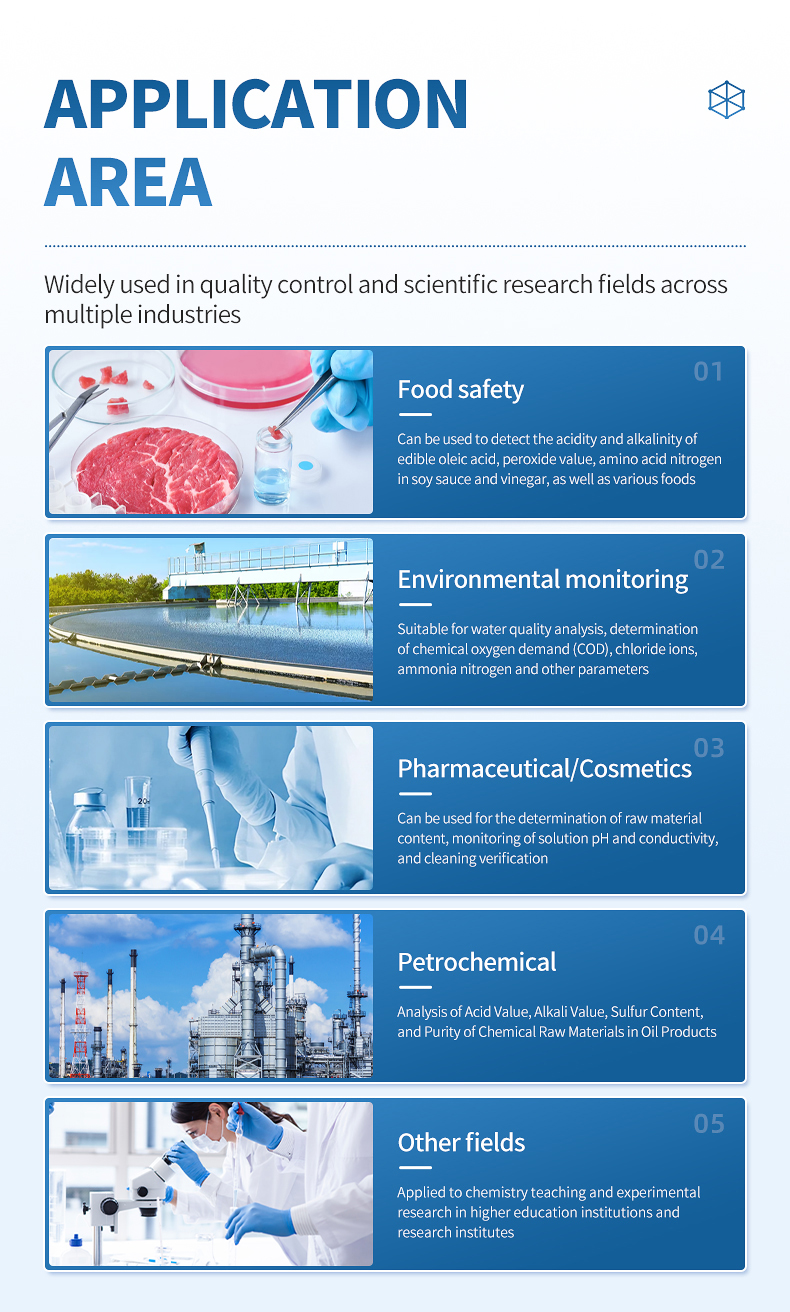
Boiler Water Alkalinity Speciation: Conductometric differentiation of hydroxide, carbonate, and bicarbonate alkalinity fractions for corrosion control optimization in power plant and industrial boiler systems
Ion Exchange Resin Capacity Testing: Conductivity-based breakthrough curve monitoring for water softening and demineralization system performance evaluation
Pharmaceutical Weak Acid Assay: Conductometric endpoint detection for raw material titration where potentiometric signals are ambiguous, including weak organic acids and buffered formulations
Water Treatment Coagulant Dosing: Conductivity titration to determine optimal alum and ferric chloride dosage for flocculation process efficiency
Environmental Water Monitoring: Chloride determination by silver nitrate precipitation with conductivity detection in high-turbidity samples where optical methods fail
Cleaning Validation: Conductivity-based rinse water analysis for pharmaceutical equipment cleaning verification per GMP guidelines
Food Safety Routine Testing: Standard acid value and peroxide value determination using potentiometric detection for edible oil and condiment quality control
Key Features & Advantages
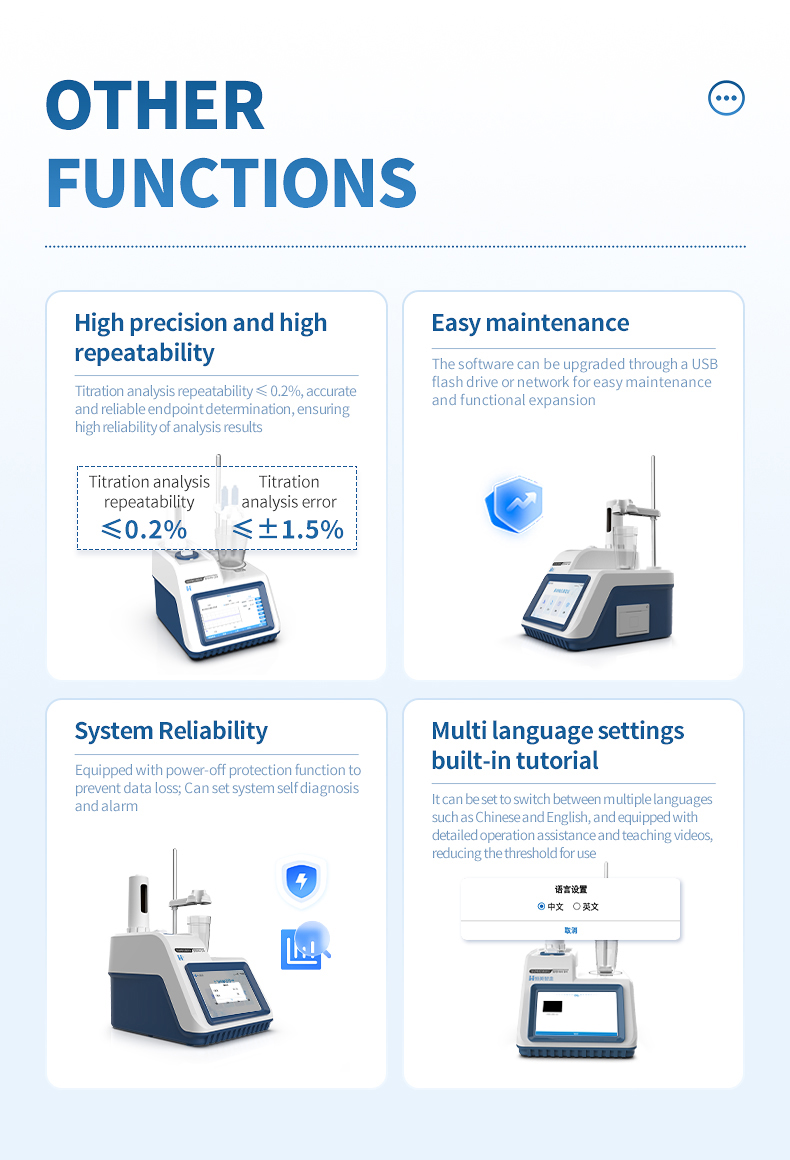
Dual-Detection Endpoint Accuracy: Conductivity inflection point detection provides reliable endpoints for weak acid-base systems where potentiometric signals are ambiguous, expanding the range of samples your laboratory can analyze accurately.
Full-Range Conductivity Measurement: 0.00 μS/cm to 2,000 mS/cm with ±1.0% FS accuracy — from ultrapure water to concentrated brine — eliminates the need for a separate conductivity meter.
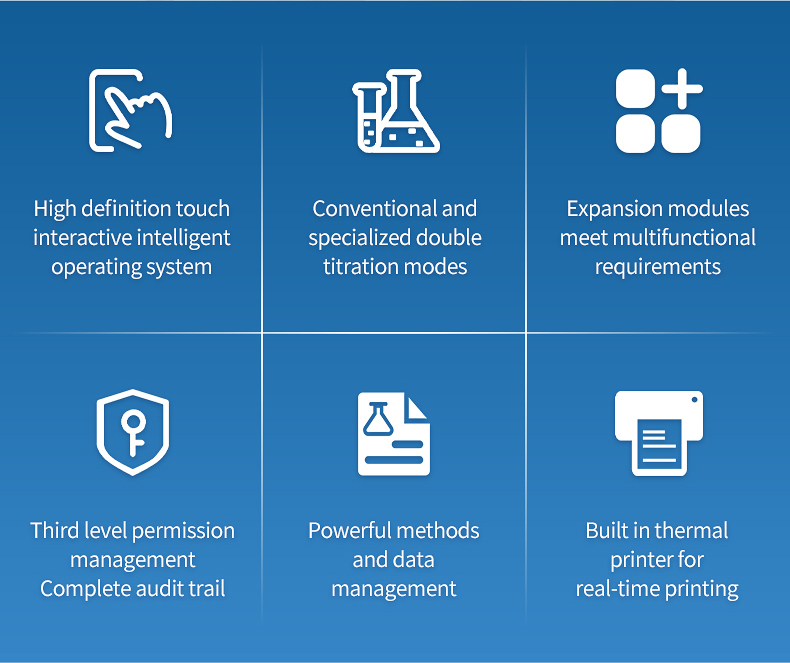
Five-Method Versatility: Acid-base, redox, precipitation, complexometric, and conductometric titration in one instrument, reducing capital expenditure and bench space requirements.
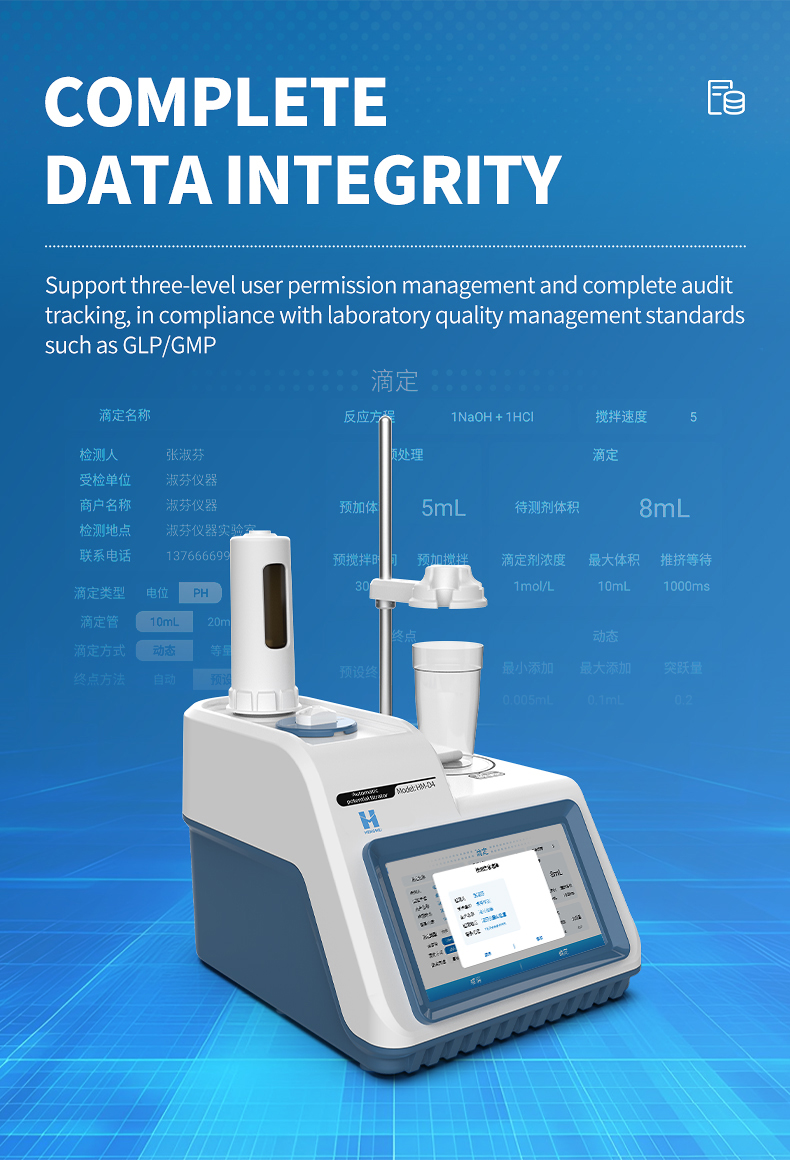
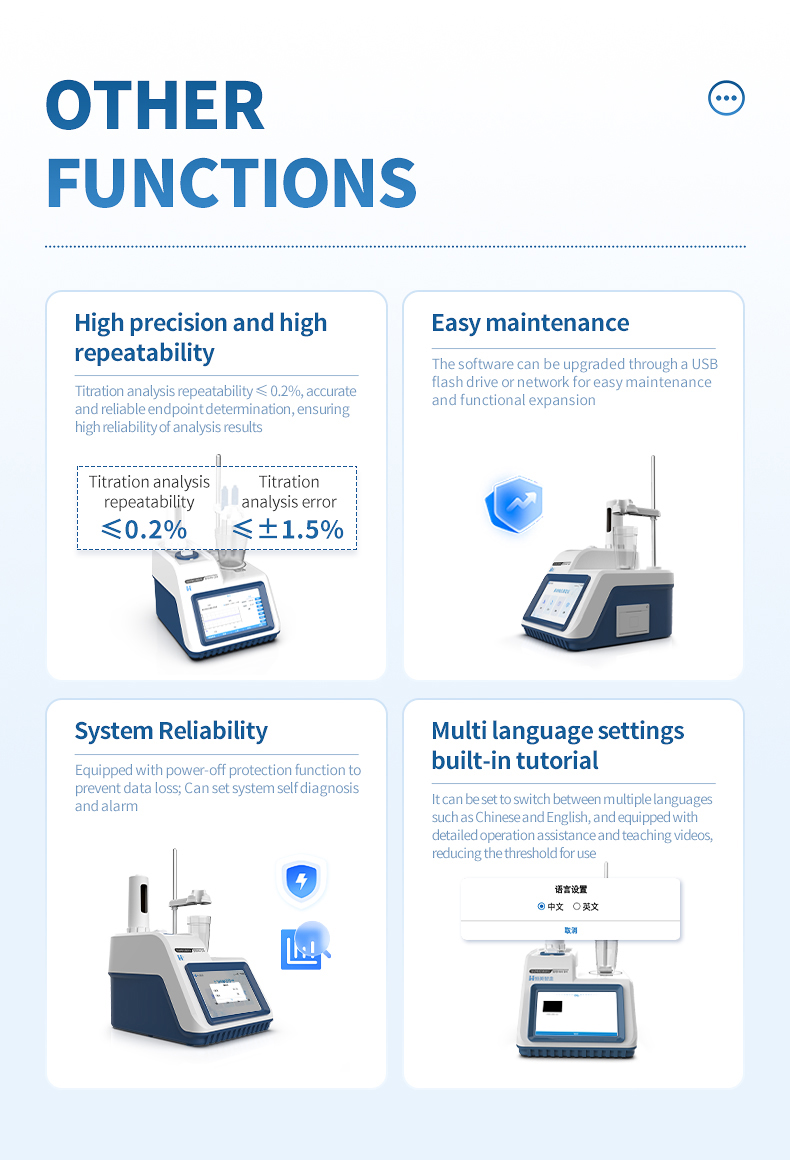
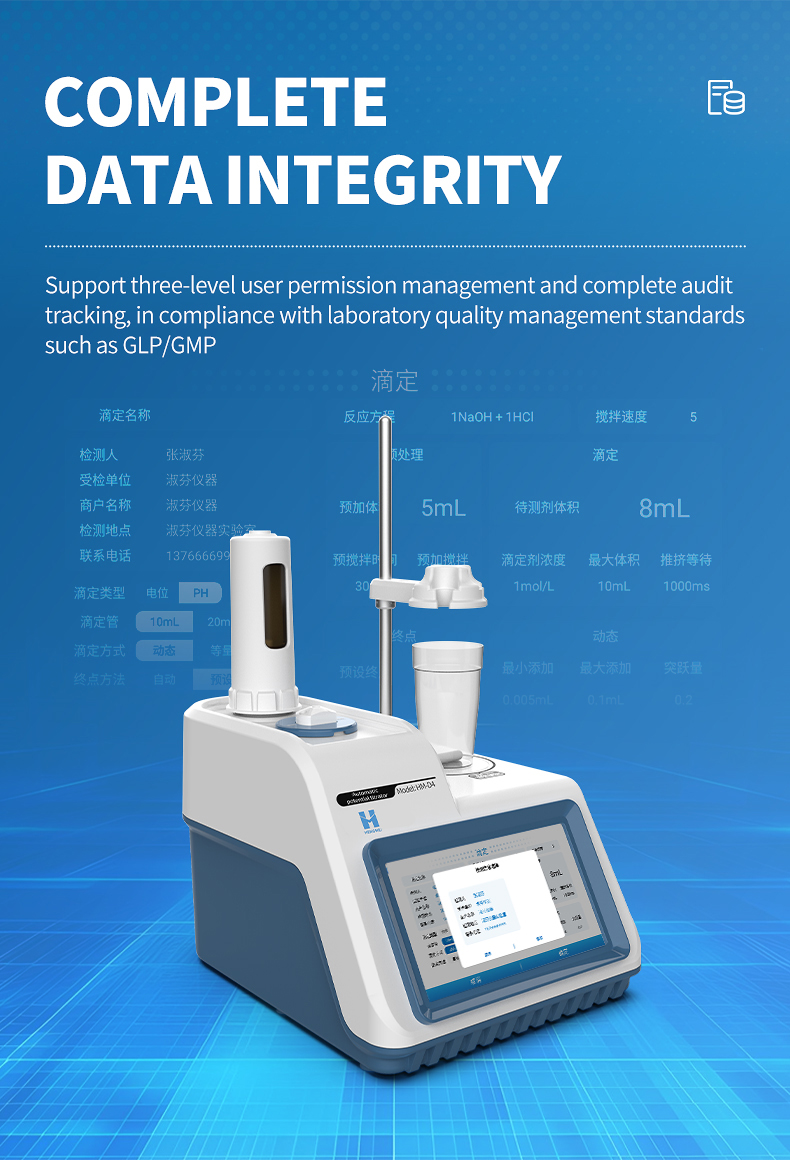
Regulatory-Ready Data Integrity: Three-level user permissions, complete audit trail, electronic signatures, and power-off data protection meet FDA 21 CFR Part 11 and EU GMP Annex 11 requirements.
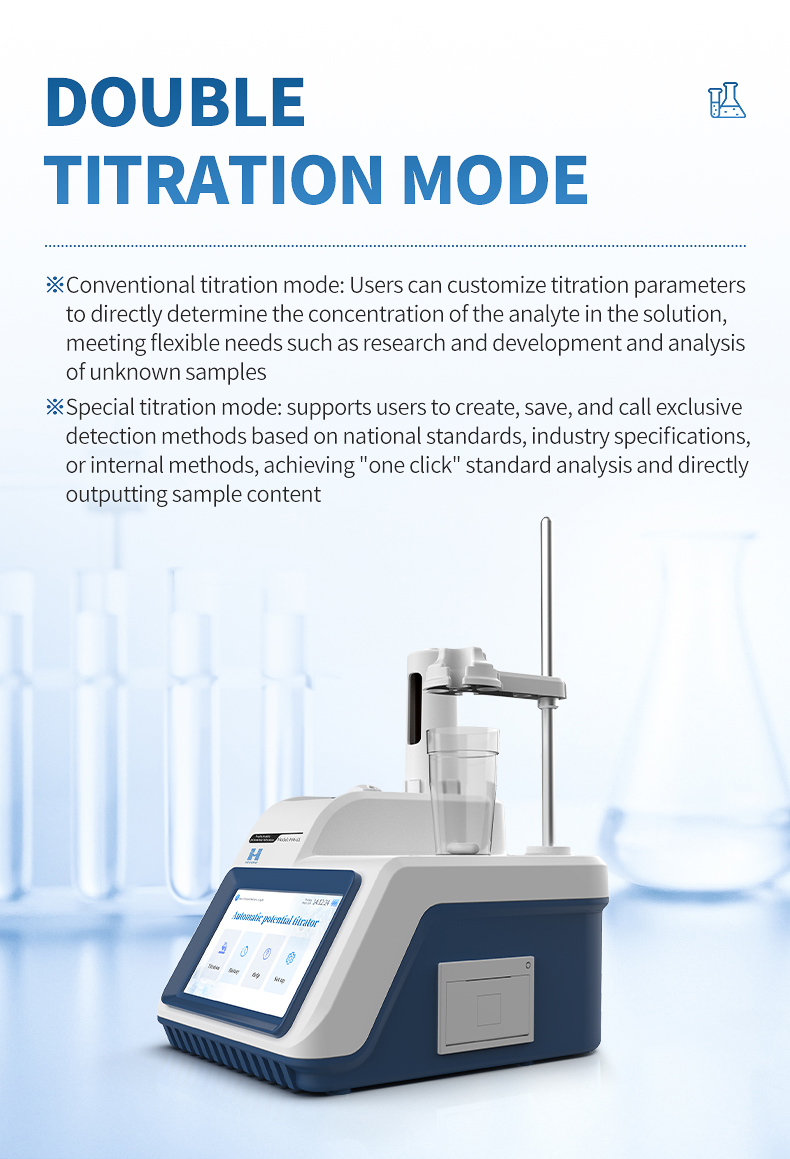
One-Click Standard Methods: Pre-configured specialized titration methods for common water quality and pharmacopeia standards eliminate setup variability between operators.
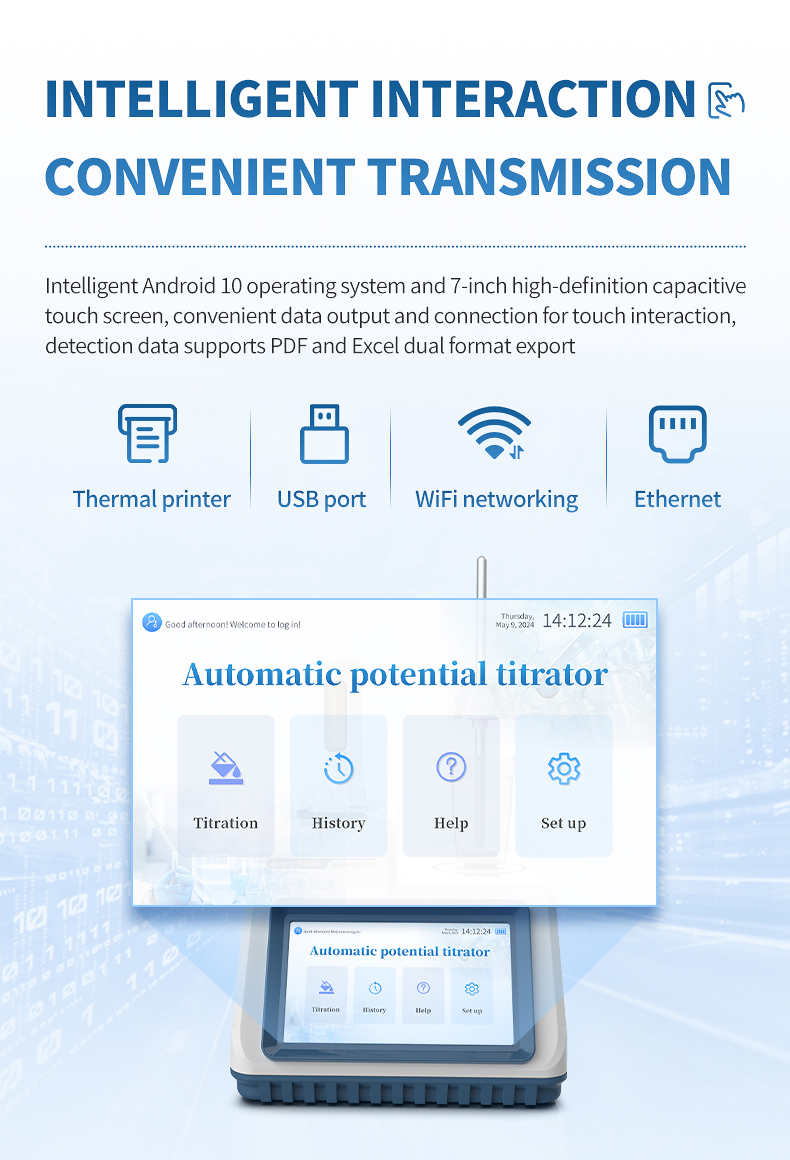
Android 10 Touchscreen Interface: 7-inch capacitive display with real-time dual-curve overlay (potential + conductivity) enables technicians to compare both detection channels simultaneously.
Automated High-Throughput Workflow: Automatic titrant dispensing, endpoint detection, result calculation, and report generation allow a single technician to process 40+ samples per shift.
Multi-Format Data Export: PDF reports for immediate filing, Excel export for statistical process control, Wi-Fi upload for LIMS integration, and built-in thermal printer for bench-side hard copies.
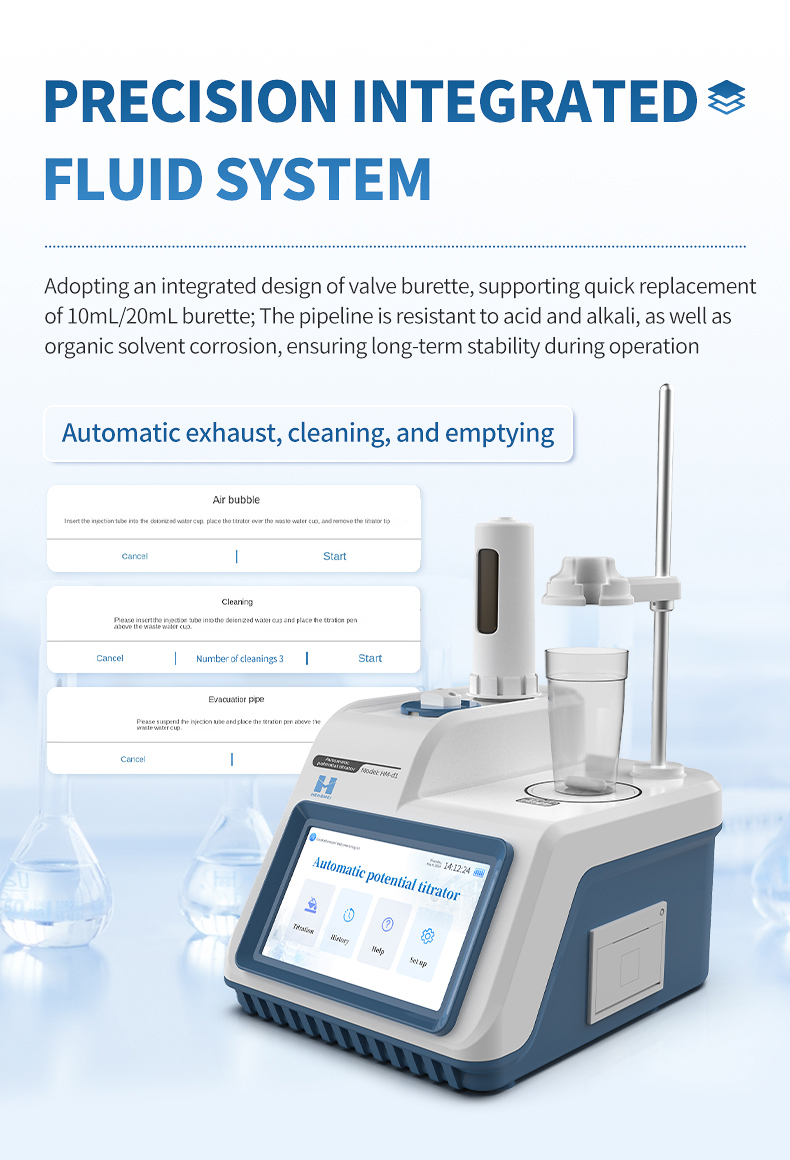
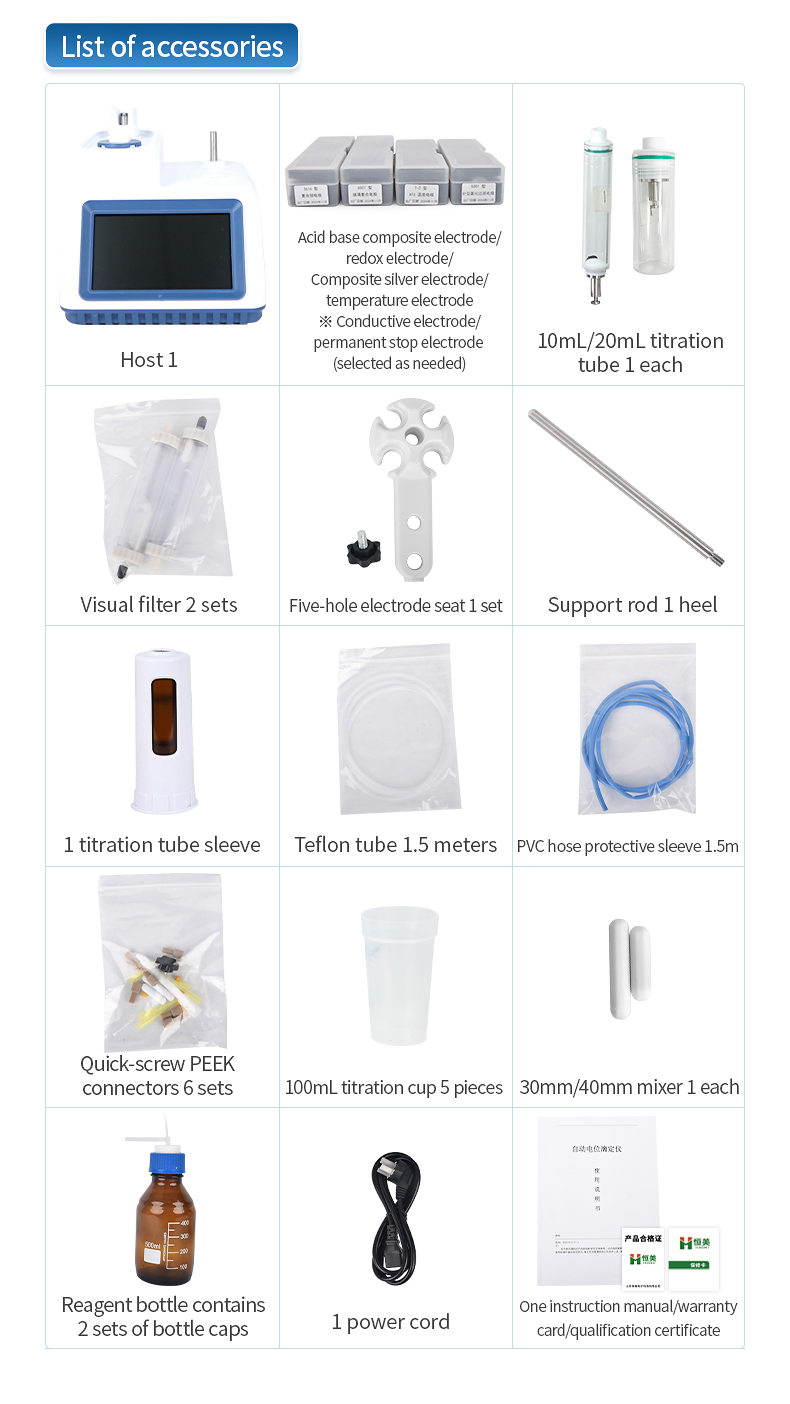
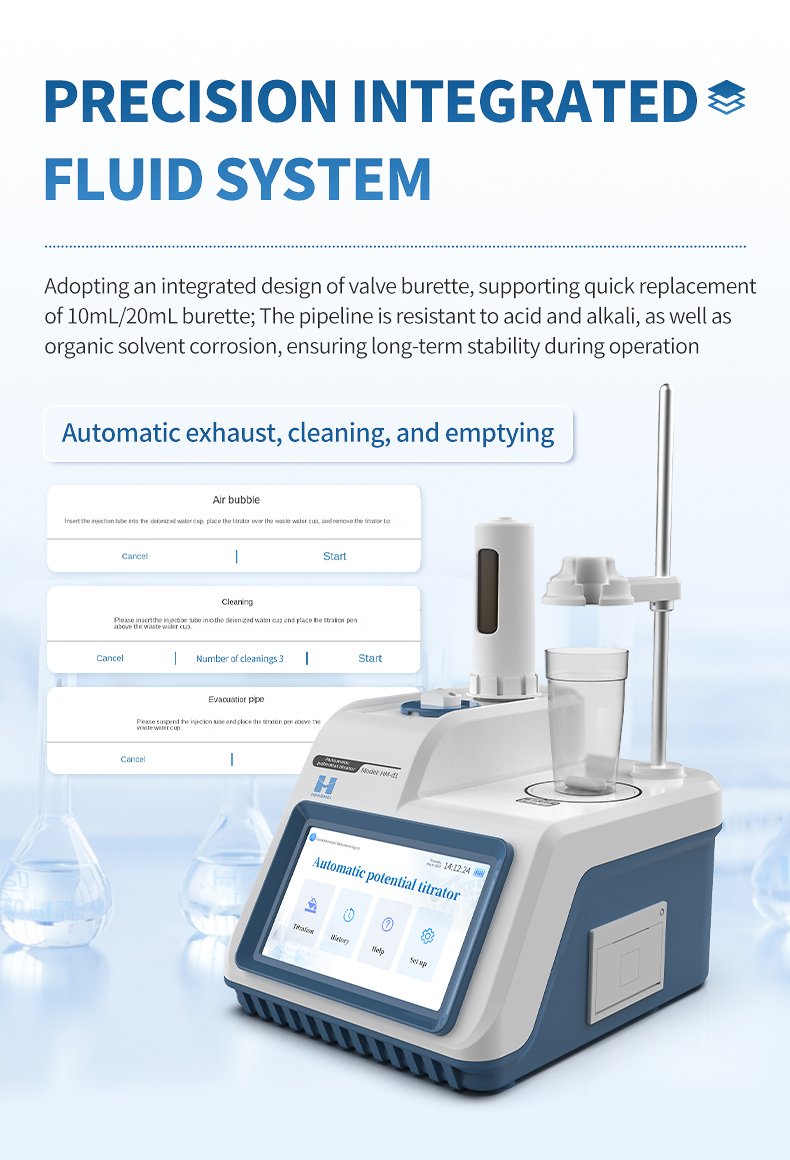
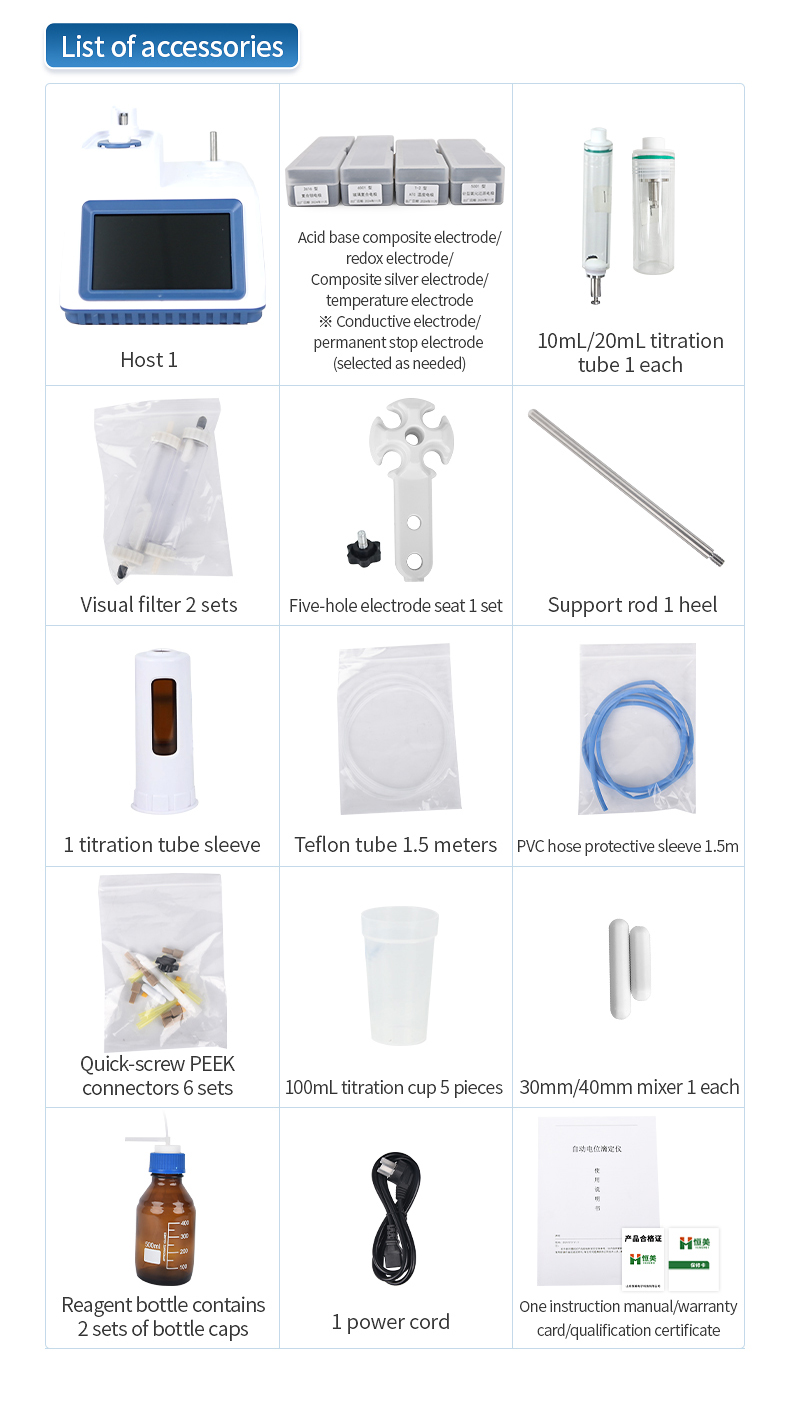
Corrosion-Resistant Fluid Path: Acid, alkali, and organic solvent resistant tubing with quick-swap 10 mL / 20 mL burettes reduces maintenance time and extends instrument service life.
Standalone Conductivity Mode: Use the conductivity module independently for routine water quality screening without running a full titration — maximizing instrument utilization.
Intelligent Method Library: Store and recall up to hundreds of custom methods with embedded calculation formulas, ensuring method consistency across shifts and operators.
System Self-Diagnosis: Automatic bubble detection, fluid path blockage alerts, and electrode health monitoring prevent analytical errors before they affect results.
Technical Specifications
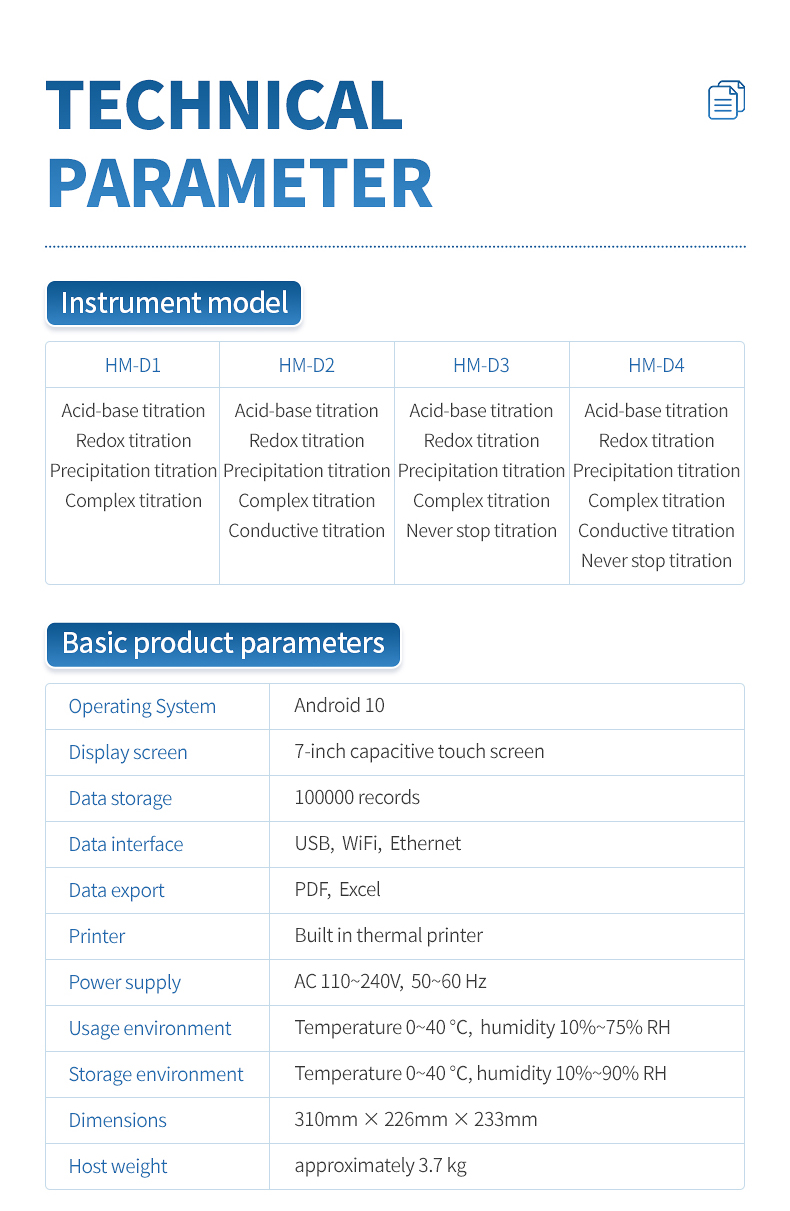
| Parameter | Specification |
|---|---|
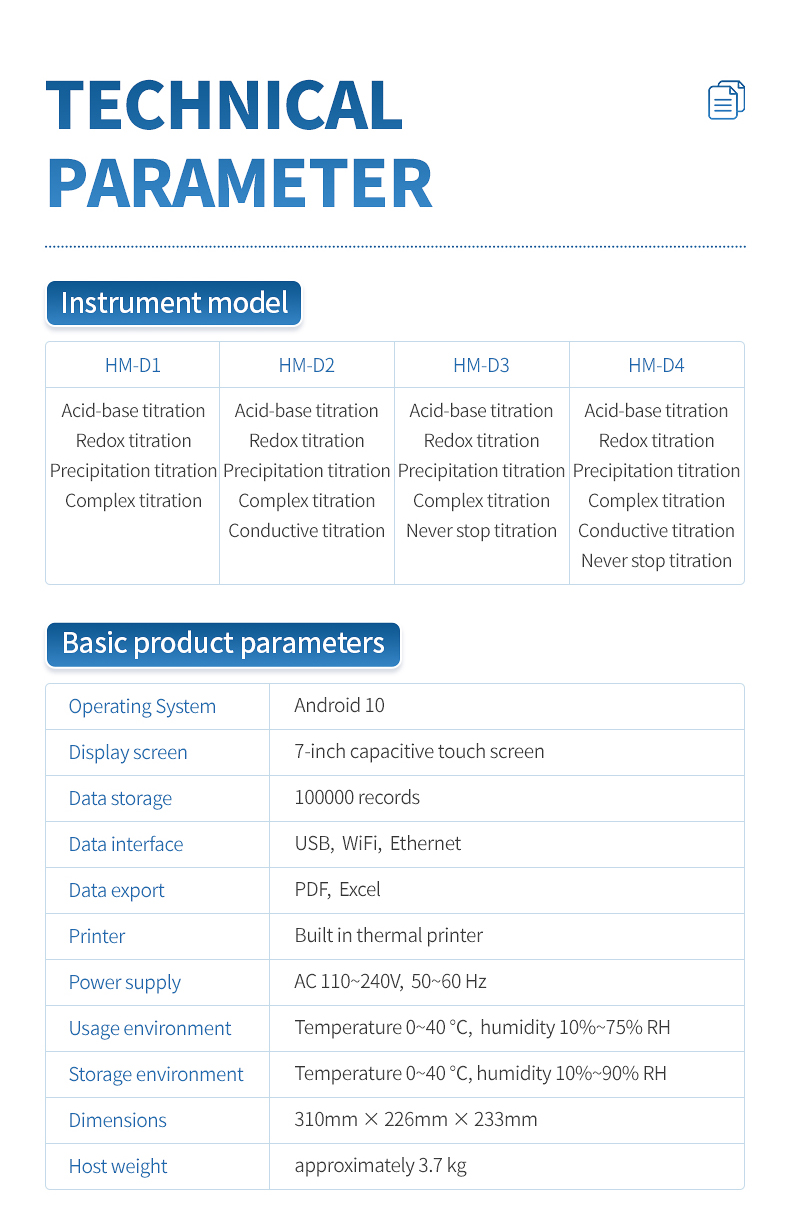
| Titration Methods | Acid-base, Redox, Precipitation, Complexometric, Conductometric |
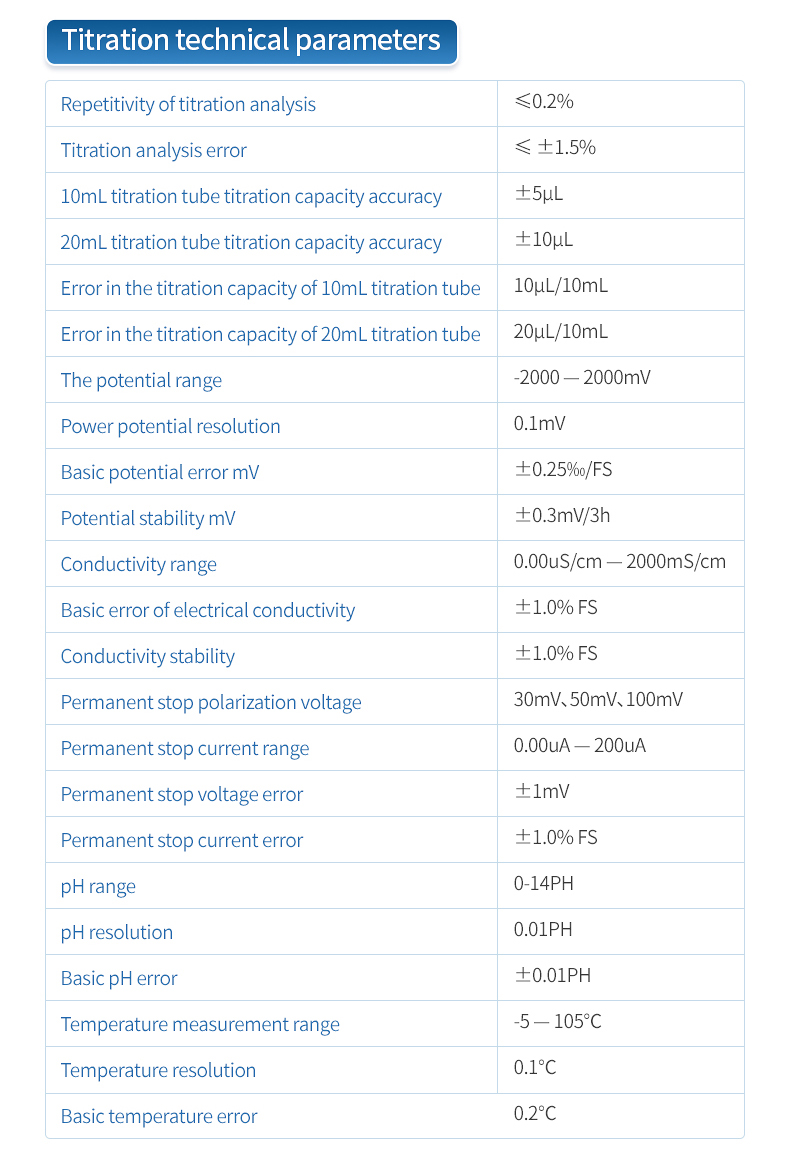
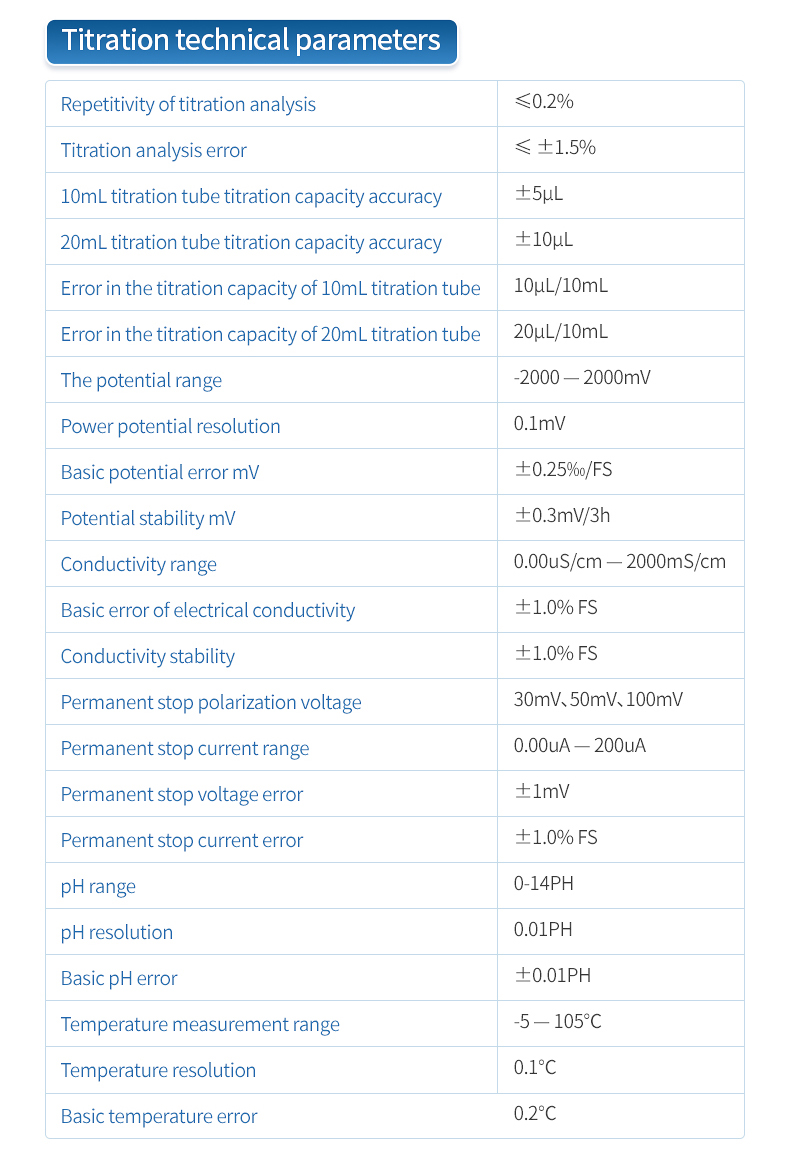
| Repeatability | ≤ 0.2% |
| Analysis Error | ≤ ±1.5% |
| Burette Options | 10 mL (±5 μL) / 20 mL (±10 μL), quick-swap |
| Potential Measurement | -2,000~+2,000 mV, 0.1 mV resolution, ±0.25‰ FS |
| pH Measurement | 0~14 pH, 0.01 pH resolution, ±0.01 pH accuracy |
| Conductivity Range | 0.00 μS/cm ~ 2,000 mS/cm |
| Conductivity Basic Error | ±1.0% FS |
| Conductivity Stability | ±1.0% FS |
| Temperature | -5~105 °C, 0.1 °C resolution, ±0.2 °C accuracy |
| Endpoint Detection | Dynamic, equal-volume, preset endpoint, manual modes |
| Display | 7-inch capacitive touchscreen, Android 10 |
| Data Storage | 100,000 records with full titration curves |
| Data Export | PDF, Excel, built-in thermal printer |
| Connectivity | USB, Wi-Fi, Ethernet |
| Power | AC 110~240V, 50~60 Hz (universal) |
| Operating Conditions | 0~40 °C, 10%~75% RH |
| Dimensions | 310×226×233 mm |
| Weight | ~3.7 kg |
FAQ
Q1: Why is conductivity detection better than potentiometric detection for weak acid-base titration?
In weak acid-base systems, the pH change at the equivalence point is gradual rather than sharp, making it difficult for a glass pH electrode to identify the exact endpoint. Conductivity detection measures the total ionic concentration change, which shifts abruptly when the dominant ion species transitions — for example, when H⁺ ions are replaced by Na⁺ ions during a weak acid titration with NaOH. This produces a clear V-shaped conductivity curve with a well-defined minimum at the equivalence point, regardless of how weak the acid or base is.
Q2: Can the HM-D2 conductivity module replace a standalone conductivity meter for routine water quality testing?
Yes. The HM-D2's conductivity module operates independently as a direct-reading conductivity meter with a range of 0.00 μS/cm to 2,000 mS/cm, covering everything from ultrapure water to concentrated process streams. It includes automatic temperature compensation and meets the accuracy requirements of ISO 7888 and ASTM D1125. Laboratories that currently maintain separate conductivity meters and titrators can consolidate both functions into the HM-D2, saving bench space and reducing calibration workload.
Q3: How does the HM-D2 handle boiler water alkalinity speciation for power plant applications?
Boiler water alkalinity exists in three forms — hydroxide, carbonate, and bicarbonate — and determining the relative proportions is critical for corrosion control. The HM-D2 uses conductometric titration with hydrochloric acid to identify two distinct conductivity inflection points corresponding to the hydroxide-to-carbonate and carbonate-to-bicarbonate transitions. The instrument's method library stores the alkalinity speciation calculation formula, automatically computing P-alkalinity, M-alkalinity, and individual species concentrations from the two endpoint volumes.
Q4: What pharmaceutical applications benefit most from the HM-D2's conductometric titration capability?
Conductometric titration excels in pharmaceutical applications involving weak organic acids (such as acetylsalicylic acid, citric acid, and amino acids), where potentiometric endpoints are poorly defined. It's also valuable for non-aqueous titration endpoint detection, buffer capacity characterization, and cleaning validation rinse water analysis. The HM-D2's GLP/GMP compliance features — including three-level permissions, full audit trail, and electronic record protection — ensure all pharmaceutical data meets FDA 21 CFR Part 11 requirements.
Q5: Can the HM-D2 display both potentiometric and conductivity curves simultaneously during a single titration?
Yes. The HM-D2's Android 10 touchscreen can overlay both the potential (mV or pH) and conductivity curves in real time during a single titration run. This dual-curve display is particularly useful for method development, allowing analysts to compare which detection channel provides the sharper endpoint for a given sample matrix. Once the optimal detection method is identified, it can be saved as a specialized method for routine one-click execution.
Q6: How does the automatic cleaning function work between samples in high-throughput water testing labs?
The HM-D2 features programmable automatic cleaning routines that flush the fluid path with deionized water or a user-selected rinse solution between samples. The cleaning cycle runs three times by default (adjustable 1–5 cycles), and includes an automatic pipe evacuation step that removes residual liquid from the tubing before the next sample. Combined with the corrosion-resistant fluid path materials, this automated cleaning prevents cross-contamination and extends the service life of the burette and electrode assembly.
Address of this article:https://labinstruments.net/pro24/conductivity-titrator-water-pharma-analysis.html