

 Current
location:
Current
location: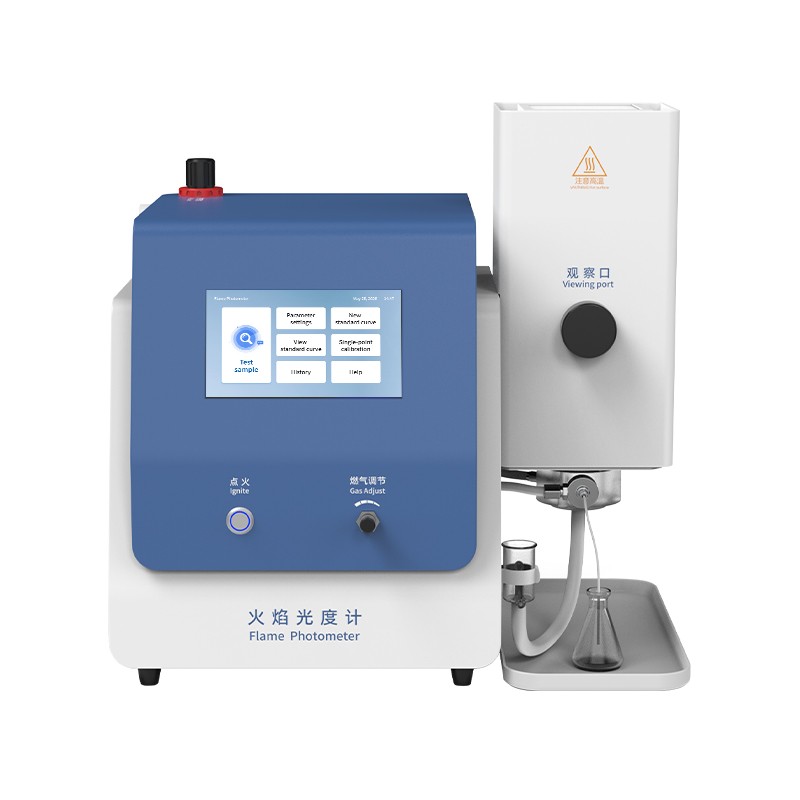
 +86 17853698681

Product Introduction
Modern agricultural productivity depends on precise soil nutrient data. Among the critical parameters, exchangeable potassium, sodium, and calcium define soil fertility structure, cation exchange capacity balance, and the risk of nutrient antagonism that directly affects crop yield. Agricultural laboratories face a persistent challenge: analyzing these three elements simultaneously without the cost and complexity of ICP-OES or the tedium of sequential single-element wet chemistry methods. As precision agriculture adoption accelerates and soil testing volumes grow — driven by government soil health programs and commercial fertilizer optimization initiatives — laboratories need instruments that deliver multi-element results quickly, accurately, and at accessible price points.
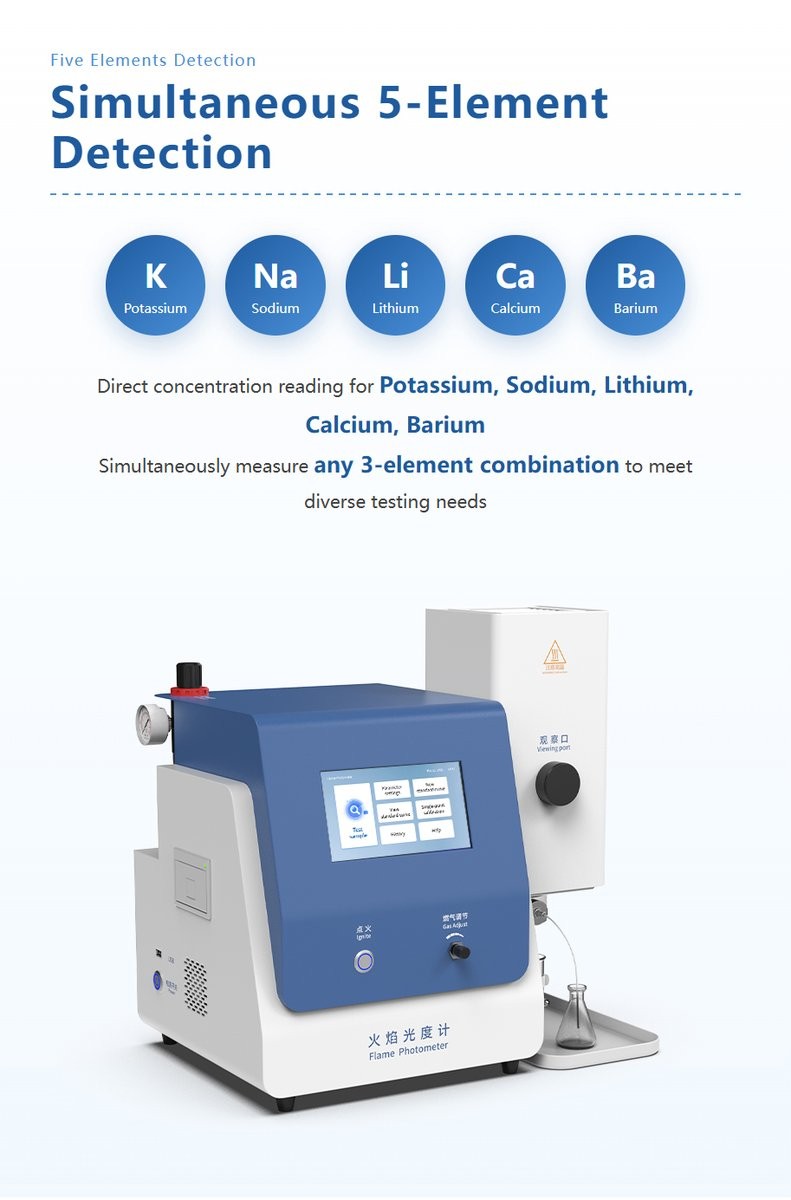
The HM-FP3A flame photometer was developed precisely for this application niche. Unlike 2-channel instruments limited to K and Na, the HM-FP3A adds a dedicated calcium detection channel, enabling agricultural laboratories to obtain a complete alkali and alkaline earth cation profile — K, Na, and Ca — from a single sample aspiration. This three-element capability is particularly significant for soil exchangeable calcium determination, a parameter increasingly demanded by advanced fertilizer recommendation systems that account for Ca:K ratio effects on crop nutrient uptake.
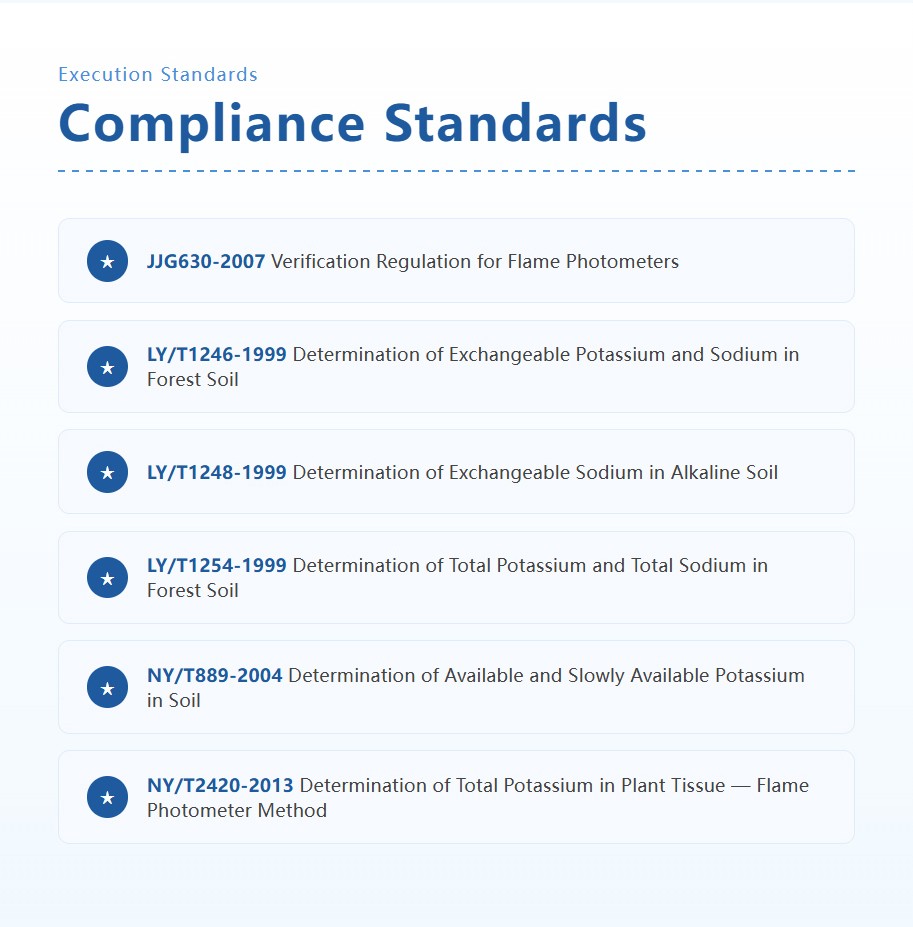
The instrument complies with the full suite of relevant Chinese analytical standards: JJG630-2007 for metrological verification, LY/T1246-1999 and LY/T1254-1999 for forest soil exchangeable and total potassium/sodium, LY/T1248-1999 for alkaline soil exchangeable sodium, NY/T889-2004 for soil available potassium, and NY/T2420-2013 for plant tissue total potassium by flame photometry. This comprehensive standards compliance means that accredited agricultural testing laboratories can deploy the HM-FP3A with full regulatory confidence.
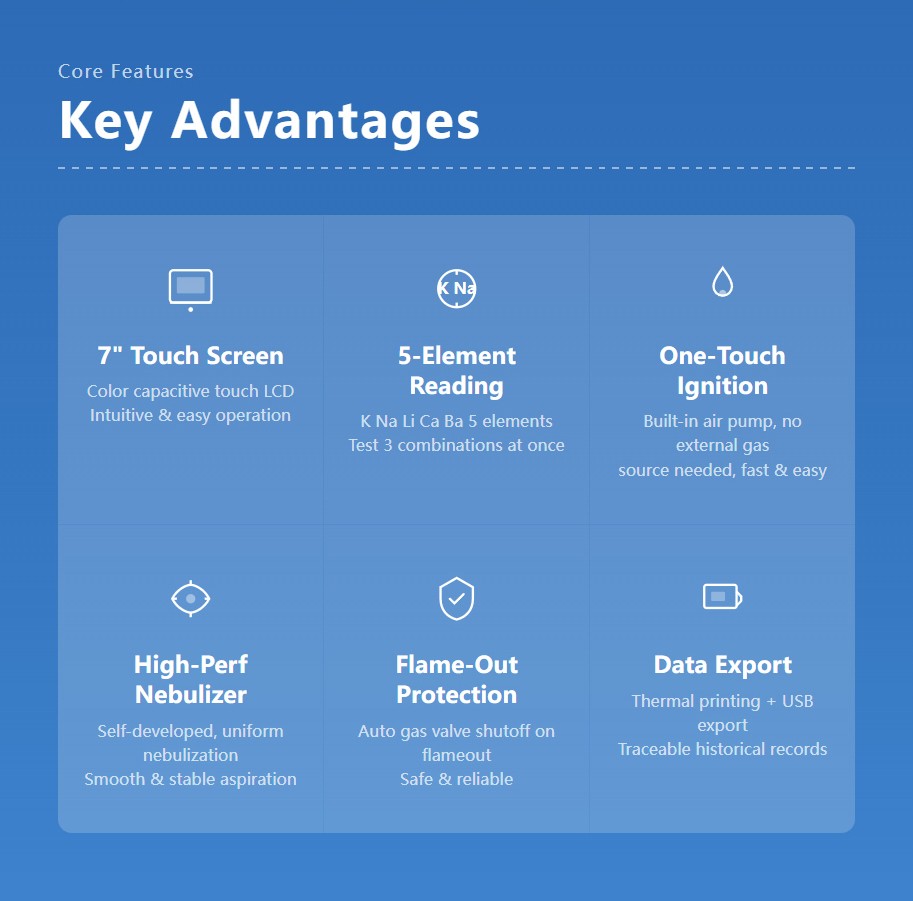
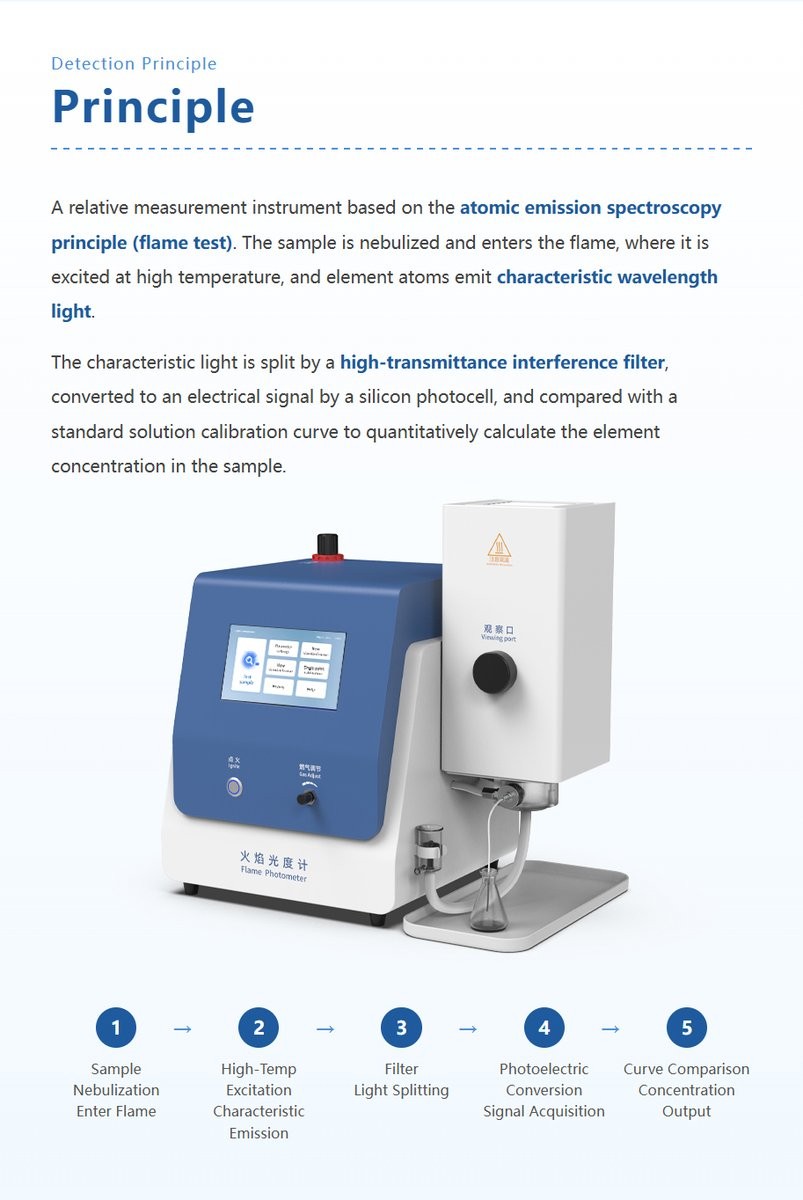
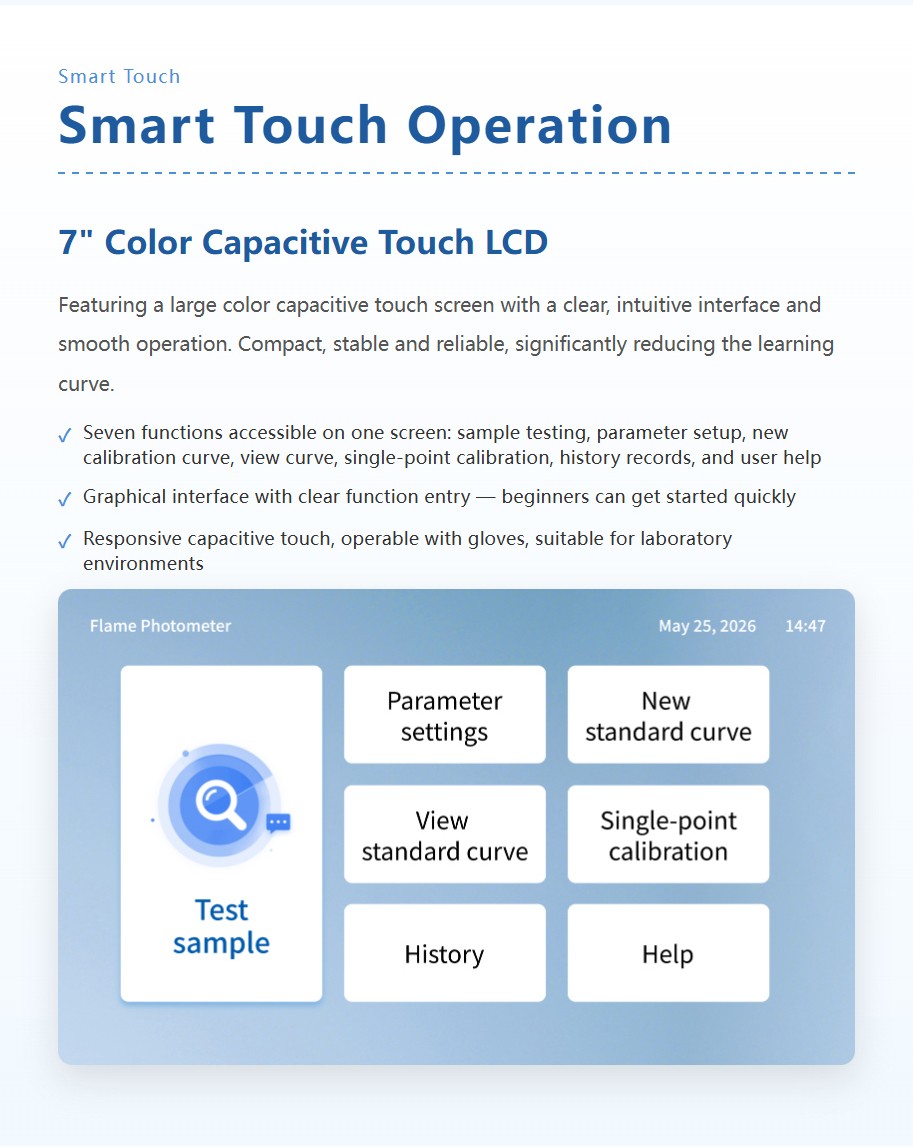
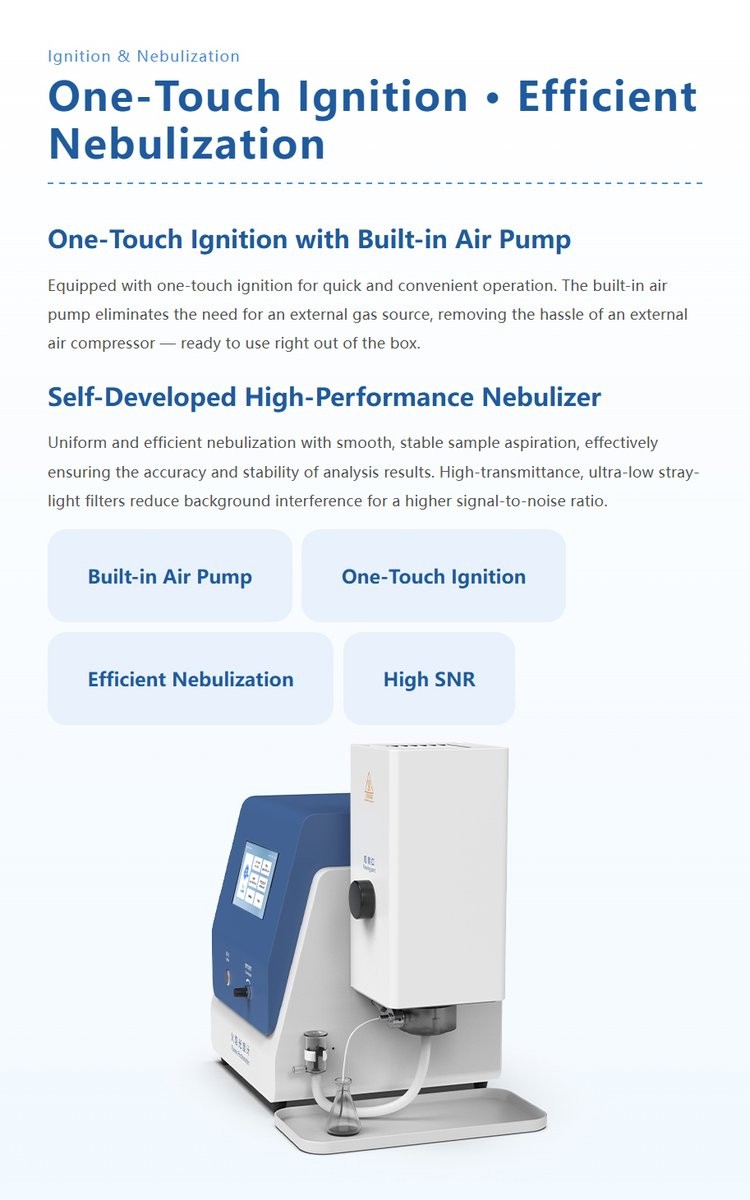
Operational simplicity is engineered into every aspect. The 7-inch capacitive touch LCD replaces conventional button panels with an icon-driven interface that technicians master within minutes. One-touch ignition with the built-in air pump eliminates external gas infrastructure — a critical advantage for county-level agricultural extension stations and field laboratories where compressed air and gas cylinder logistics are impractical. The self-developed nebulizer delivers uniform aerosol generation at below 6 mL/min consumption, ensuring consistent results across extended batch runs of 100+ soil samples. Calibration curve storage for 20 methods with up to 10 points each allows laboratories to maintain separate calibrated protocols for soil extracts, plant digests, and irrigation water without time-consuming re-standardization between sample types.
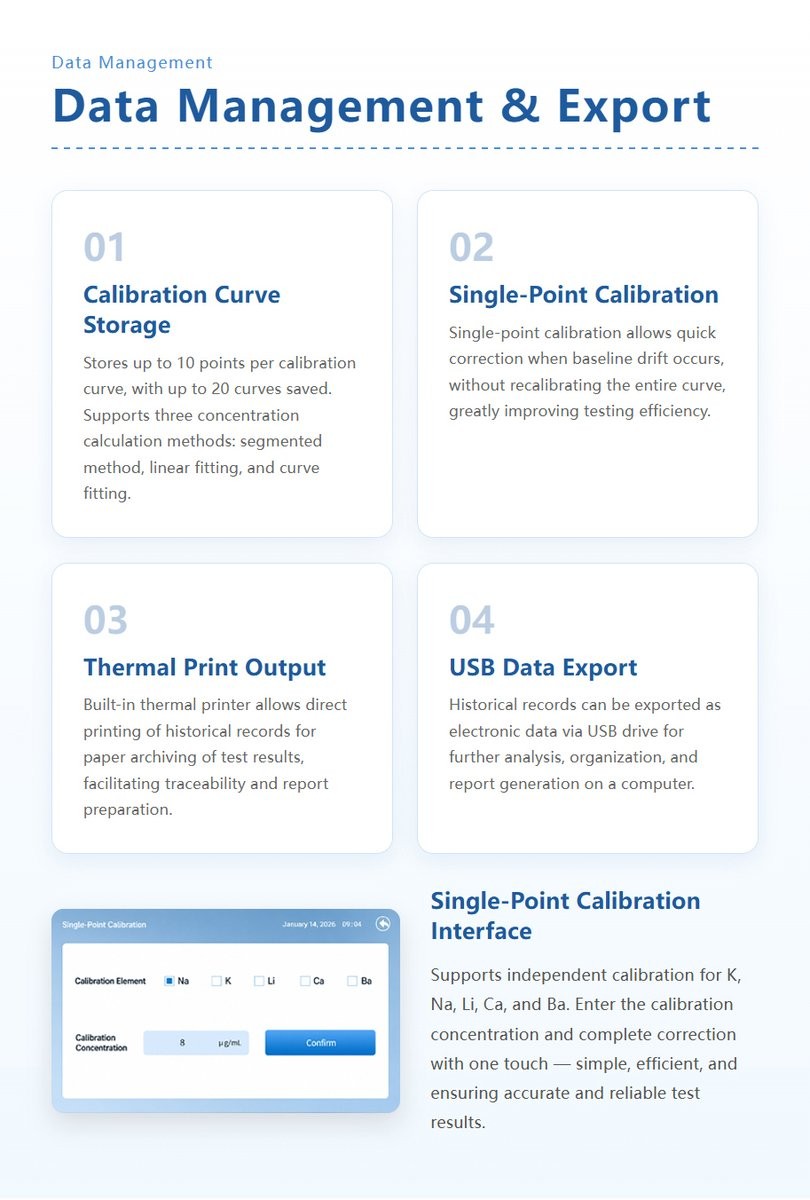
Data traceability — the backbone of laboratory accreditation — is addressed through the integrated thermal printer for immediate hard-copy records and USB drive export for electronic archival. Results flow seamlessly from instrument to LIMS, supporting ISO 17025 documentation requirements and enabling laboratory managers to maintain complete audit trails for regulatory inspections and client reporting.
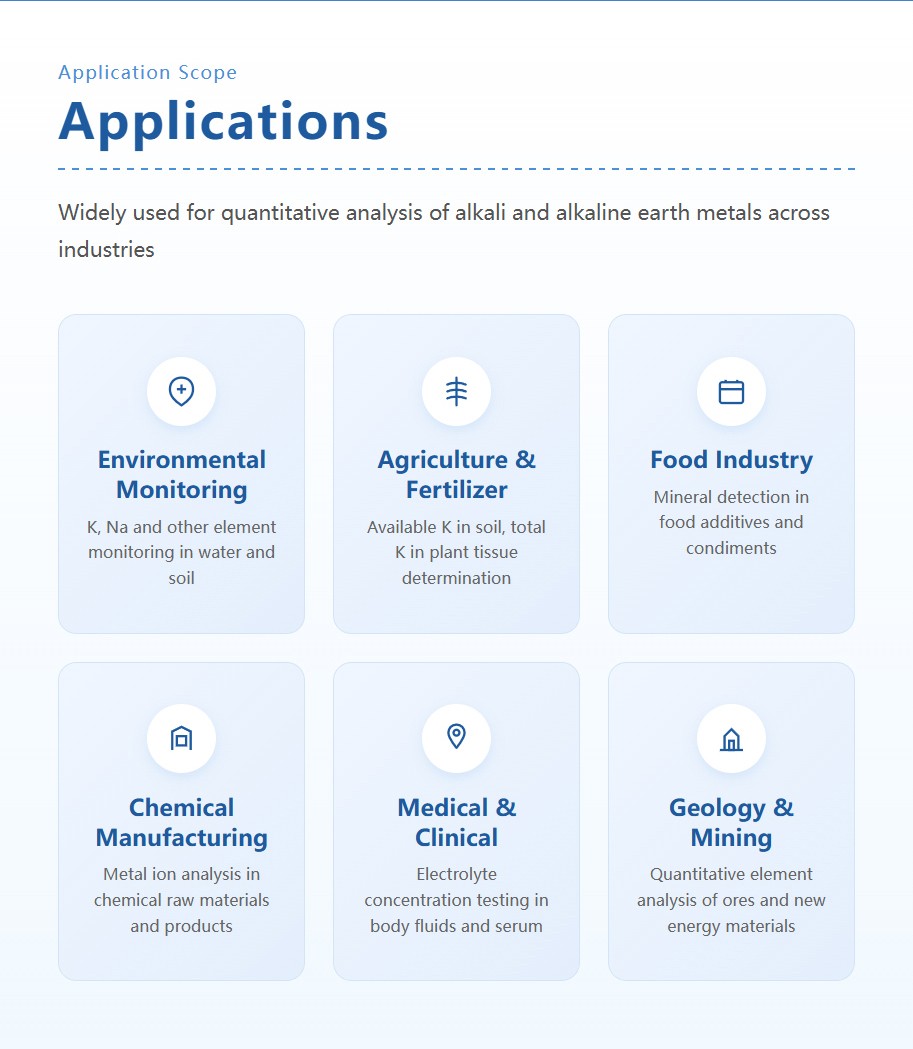
Applications
- Agricultural Soil Fertility Mapping: Simultaneous quantification of exchangeable K, Na, and Ca in soil extracts for regional soil fertility surveys and site-specific fertilizer prescription, following NY/T889-2004 methodology.
- Fertilizer Recommendation Optimization: Ca:K ratio analysis for identifying nutrient antagonism risks that reduce potassium uptake efficiency in high-calcium soils, enabling corrective amendment strategies.
- Plant Tissue Nutrition Diagnosis: Total potassium, sodium, and calcium determination in leaf and stem digests per NY/T2420-2013, supporting crop nutrition monitoring and deficiency correction programs.
- Forest Soil Nutrient Assessment: Exchangeable and total K/Na determination in forest soil profiles per LY/T1246-1999 and LY/T1254-1999 for silvicultural management and ecological monitoring.
- Saline-Alkali Soil Reclamation: Exchangeable sodium percentage (ESP) calculation using simultaneous Na and Ca data per LY/T1248-1999, guiding gypsum amendment rates for soil remediation.
- Irrigation Water Quality Assessment: Sodium adsorption ratio (SAR) calculation from Na and Ca concentrations in irrigation water, preventing soil structure degradation from poor-quality water sources.
- Organic Fertilizer Quality Verification: K and Ca content analysis in compost, biochar, and organic fertilizer products for nutrient content labeling and quality assurance.
Key Features & Advantages
- 3-channel simultaneous K-Na-Ca detection — complete alkali and alkaline earth cation profile in a single aspiration, tripling throughput versus sequential methods
- Dedicated calcium channel — enables soil exchangeable calcium determination and Ca:K ratio analysis critical for modern fertilizer recommendation
- 7-inch capacitive touch LCD — icon-driven interface reduces training time to under 10 minutes for new operators
- Built-in air pump and one-touch ignition — zero external gas infrastructure requirement, ideal for county-level extension stations and field labs
- High-transmittance interference filters — element-specific wavelength isolation with ultra-low stray light for reliable calcium detection at agricultural concentration levels
- Self-developed nebulizer — uniform aerosol at <6 mL/min consumption, validated for 500+ sample batch runs without performance degradation
- 20 method storage, 10 points per curve — separate calibration protocols for soil, plant, and water matrices maintained simultaneously
- Segmented, linear, and curve fitting — concentration calculation algorithms optimized for the wide dynamic ranges encountered in soil analysis
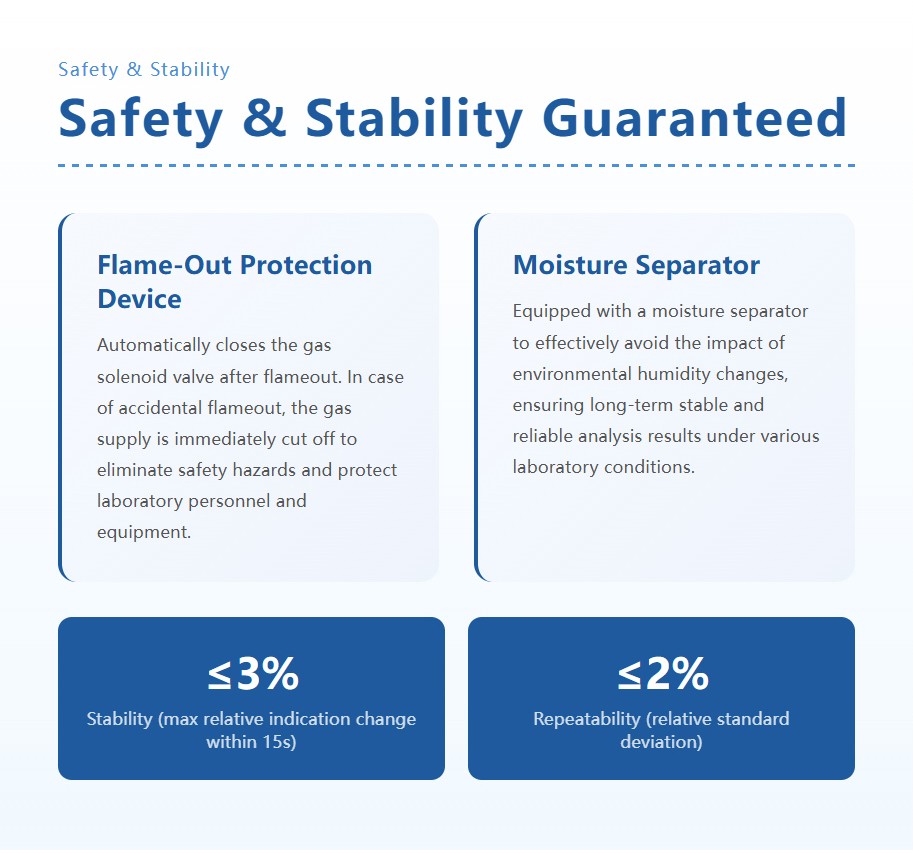
- Moisture separator — eliminates humidity-induced signal instability in tropical agricultural regions and greenhouse-adjacent laboratories
- Flame-out protection — automatic gas solenoid valve shutoff prevents hazardous gas accumulation during unattended batch operation
- Single-point calibration — rapid baseline correction between sample batches without full recalibration cycle
- Thermal printer — immediate hard-copy documentation for field records and client chain-of-custody requirements
- USB drive export — electronic data archival and LIMS integration supporting ISO 17025 traceability requirements
- Full standards compliance — JJG630-2007, LY/T1246, LY/T1248, LY/T1254, NY/T889, NY/T2420 for accredited laboratory operation
- Compact bench footprint — 460 × 325 × 450 mm fits standard laboratory benches alongside digestion blocks and balances
- Low operating cost — ≤50W power, no gas cylinder rental, minimal consumable requirements for sustainable long-term operation
Technical Specifications
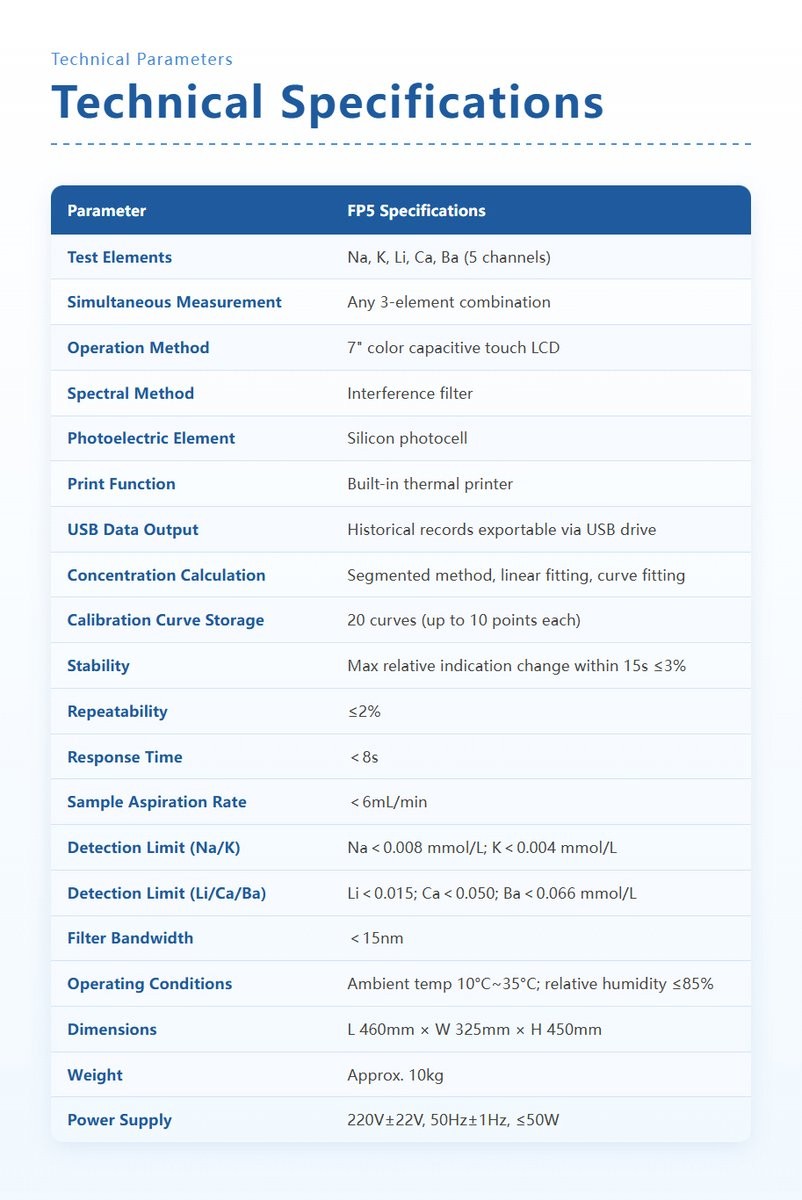
| Parameter | Specification |
|---|---|
| Model | HM-FP3A |
| Test Elements | K, Na, Ca (3 channels) |
| Spectral Method | Interference filter |
| Photoelectric Element | Silicon photocell |
| Operation Interface | 7-inch color capacitive touch LCD |
| Linearity Error | Na < 0.03 mmol/L, K < 0.005 mmol/L, Ca < 0.075 mmol/L |
| Detection Limit | Na < 0.008 mmol/L, K < 0.004 mmol/L, Ca < 0.050 mmol/L |
| Stability | ≤3% (max relative indication change in 15s), ≤8% (6 measurements) |
| Repeatability | ≤2% |
| Response Time | <8s |
| Sample Aspiration Rate | <6 mL/min |
| Filter Bandwidth | <15 nm |
| Filter Center Wavelength Error | Na < 5 nm, K < 7 nm, Ca < 7 nm |
| Concentration Calculation | Segmented method, linear fitting, curve fitting |
| Calibration Curves | Up to 10 points per curve, 20 curves total |
| Print Function | Built-in thermal printer |
| USB Data Output | Historical records exportable via USB drive |
| Ignition System | One-touch ignition with built-in air pump |
| Safety Features | Flame-out protection (auto gas solenoid valve shutoff) |
| Moisture Management | Integrated moisture separator |
| Operating Conditions | 10°C–35°C, relative humidity ≤85% |
| Dimensions | 460 × 325 × 450 mm |
| Weight | ~10 kg |
| Power Supply | 220V±22V, 50Hz±1Hz, ≤50W |
| Compliance Standards | JJG630-2007, LY/T1246-1999, LY/T1248-1999, LY/T1254-1999, NY/T889-2004, NY/T2420-2013 |
FAQ
Q1: Why choose a 3-channel flame photometer over a 2-channel model for soil analysis?
Agricultural soil fertility assessment increasingly requires calcium data alongside potassium and sodium. Soil exchangeable calcium determines cation exchange capacity balance, and the Ca:K ratio directly affects potassium uptake efficiency by crops. A 2-channel instrument (K and Na only) cannot provide this calcium information, forcing laboratories to run separate analyses or outsource calcium testing. The HM-FP3A's third channel delivers all three elements in a single aspiration, eliminating additional sample preparation, reducing analysis time by approximately 33%, and enabling real-time Ca:K ratio calculation for immediate fertilizer recommendation adjustments.
Q2: Can the HM-FP3A handle high-salinity soil samples from arid and semi-arid regions?
Yes. The HM-FP3A is designed to handle the elevated salt concentrations typical of arid region soil extracts. The instrument's detection range covers the concentration levels encountered in saline soil analysis, and the segmented fitting algorithm ensures accuracy across wide dynamic ranges. For extremely high-salinity samples, we recommend appropriate dilution before aspiration to maintain optimal nebulizer performance. The moisture separator prevents salt-induced humidity from affecting optical measurements, and the flame-out protection system ensures safe operation even when aspirating high-salt solutions that may cause intermittent flame instability.
Q3: How does the HM-FP3A support fertilizer recommendation workflows?
The HM-FP3A streamlines fertilizer recommendation by providing simultaneous K, Na, and Ca data from a single soil extract. Laboratories can store separate calibration curves for different soil types and extraction methods (e.g., ammonium acetate extraction for exchangeable cations, Mehlich-3 for available nutrients). The 20-curve storage capacity accommodates multiple method protocols. After measurement, the three-element results enable calculation of key fertility indices including cation exchange capacity, base saturation percentage, and nutrient balance ratios — all essential inputs for site-specific fertilizer prescription software used in precision agriculture.
Q4: What is the practical detection capability for calcium in typical agricultural soil extracts?
The HM-FP3A achieves a calcium detection limit below 0.050 mmol/L with linearity error less than 0.075 mmol/L. In practice, agricultural soil extracts prepared with standard ammonium acetate (pH 7.0) extraction typically contain calcium in the 1–50 mmol/L range, well within the instrument's linear working range. This means the HM-FP3A provides reliable calcium quantification for virtually all agricultural soil types — from low-calcium acid soils to high-calcium calcareous soils — without requiring matrix-specific dilution protocols for most routine analyses.
Q5: How does the instrument support plant tissue analysis for crop nutrition monitoring?
The HM-FP3A complies with NY/T2420-2013 (Determination of Total Potassium in Plant Tissue — Flame Photometer Method), and its 3-channel capability extends plant analysis to include sodium and calcium alongside potassium. Plant tissue samples — typically leaf or stem material — are digested using sulfuric acid-hydrogen peroxide or dry ashing methods, and the resulting solutions are aspirated directly into the HM-FP3A for simultaneous K-Na-Ca measurement. This multi-element capability supports comprehensive crop nutrition diagnosis, enabling agronomists to identify potassium deficiency, sodium toxicity, and calcium-related disorders from a single analytical run.
Q6: What maintenance schedule is recommended for sustained performance in high-volume soil testing labs?
For laboratories processing 100+ soil samples daily, we recommend: (1) flushing the aspiration system with deionized water for 3 minutes after every 30 samples to prevent salt accumulation; (2) draining the moisture separator at the start and end of each working day; (3) cleaning the nebulizer capillary with dilute hydrochloric acid (1:10) weekly when processing high-salinity samples; (4) verifying calibration with a mid-range check standard every 50 samples. These procedures require no specialized tools and add less than 15 minutes to a full working day, ensuring consistent <2% repeatability over extended instrument lifetimes.
Q7: Can the HM-FP3A calculate sodium adsorption ratio (SAR) for irrigation water quality?
Yes, the simultaneous Na and Ca measurement capability of the HM-FP3A directly supports sodium adsorption ratio (SAR) calculation for irrigation water quality assessment. SAR = Na / √((Ca + Mg)/2), where concentrations are in meq/L. While the HM-FP3A measures Na and Ca directly, magnesium (Mg) must be determined by a complementary method (e.g., AAS or ICP). Many agricultural laboratories use the HM-FP3A for the Na and Ca components and supplement with periodic Mg analysis, achieving practical SAR monitoring without the capital cost of full ICP instrumentation.
Expert Review
Address of this article:https://labinstruments.net/pro14/calcium-potassium-flame-photometer-agriculture.html